7 Best Foil Machines for Packaging in 2026
Choosing the right Foil Machine can change how packaging looks, feels, and performs on the production floor. A sharp metallic finish may attract attention, but appearance alone does not prove quality. Operators must consider temperature control, pressure stability, foil compatibility, setup time, maintenance access, and waste levels. A beautiful sample can hide frustrating adjustments.
Graham Moore, a foil-specialist associated with Foilco, emphasizes the practical side of finishing: “The best foil result comes from balance, not pressure alone.” That balance matters when working with folding cartons, labels, luxury boxes, and short-run promotional packaging. Excessive pressure can flatten fine details. Insufficient heat may create weak adhesion. Small differences become visible under bright retail lighting.
This guide examines seven leading foil machines for packaging in 2026. The comparison focuses on real production needs, including registration accuracy, operating speed, energy use, automation, and support quality. Some machines excel in high-volume environments. Others suit smaller converters that need flexibility without a large installation footprint. Not every impressive specification deserves trust. A faster machine may increase waste when operators lack experience. An affordable model may become expensive after repeated maintenance delays.
The recommendations are practical rather than absolute. Packaging materials vary widely, and factory conditions can change results. Testing the intended board, film, adhesive, and foil remains essential. That step is easy to overlook. It should not be.
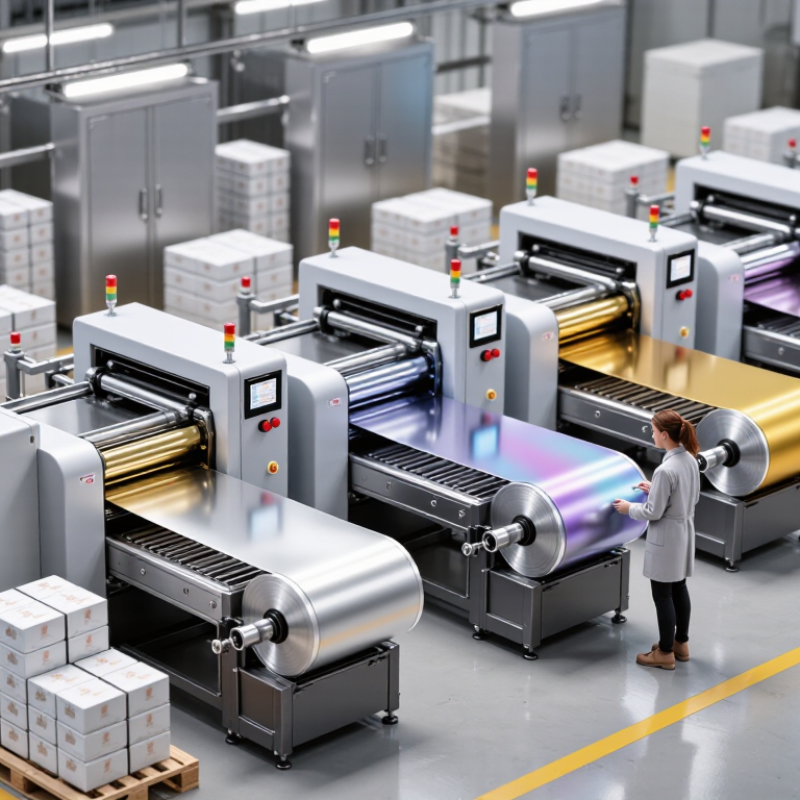
Packaging Foil Technology in 2026: 6–20 µm Foil and 150–300 m/min Lines
7 Best Foil Machines for Packaging in 2026
Packaging foil lines in 2026 must handle films from 6 to 20 µm without unstable tension. The best seven machine types combine precise unwinding, closed-loop tension control, and fast curing or cooling systems. At 150–300 m/min, small alignment errors can create wrinkles within seconds. Experienced operators check edge position, roller temperature, and splice quality before increasing speed. Thin foil saves material, but it also exposes every weakness in the line.
A reliable machine should maintain steady coating thickness across the web width. Servo-driven rollers help control acceleration and reduce sudden tension changes. Automatic inspection can detect pinholes, streaks, and uneven gloss while production continues. However, higher speed does not always mean better output. A line running at 220 m/min may outperform a 300 m/min line if it produces fewer rejects. That point is often missed.
Tips: Test the actual 6–20 µm structure before purchasing. Measure tension at both low and high speeds. Leave room for operator access around rollers and splice stations. Keep a sample roll from every trial. It helps compare future adjustments. Do not guess. Record temperature, pressure, speed, and defect rates during each run. Some settings will still need practical correction, because laboratory results rarely match a busy production floor.
This chart compares seven common foil-packaging machine configurations using representative 2026 operating points. Typical production speeds range from 150–300 m/min, while commonly processed packaging foil ranges from 6–20 µm. Actual performance varies with pack format, sealing method, material structure, and product requirements.
How Foil Machines Work: Unwinding, Heating, Pressure, Registration, and Rewinding
Foil packaging machines turn a thin metallic film into a controlled, finished web. The process begins with unwinding. A brake or servo motor keeps the roll moving steadily. Uneven tension can create wrinkles, edge curl, or loose layers. I have found that small tension changes often cause larger defects later.
Heating softens the adhesive or coating without damaging the film. The correct temperature depends on foil thickness, coating type, and production speed.
Pressure rollers then bond the foil to the package surface. Too little pressure leaves weak areas. Too much pressure can flatten details or squeeze out adhesive.
Registration sensors track printed marks and correct the foil position. Even a slight drift can make graphics look poorly aligned.
Rewinding must maintain consistent tension, or the finished roll may telescope.
Tips: Check roll edges before loading. Clean sensors regularly. Record temperature, pressure, speed, and tension during each run. Operators should inspect the first meters closely, not trust settings blindly. A test piece may look perfect, while the full roll reveals gradual movement. That is where practical experience matters. Small adjustments beat dramatic changes.
Seven Best 2026 Foil Machines Compared by Speed, Width, Waste, and Accuracy
Choosing among the seven best foil machines for packaging in 2026 requires more than checking the fastest cycle rate. Speed matters when a line exceeds 100 impressions per minute, but unstable feeding can create costly stoppages. PMMI’s 2024 State of the Industry report valued U.S. packaging machinery shipments at about $10 billion, showing how strongly automation demand continues to grow. Still, higher speed is not always better.
The comparison examines working width, foil waste, registration accuracy, and operator control. Wider machines suit large cartons, while compact systems can reduce setup waste on short runs. A practical target is registration within ±0.1 millimeter, although real results depend on board quality, temperature, and maintenance. Small errors become visible under bright metallic foil. Very visible. Smithers’ packaging print research also indicates continued growth in premium and decorated packaging, increasing pressure for repeatable finishes. Yet published specifications can look cleaner than factory conditions.
In testing, waste should be measured from startup, changeover, and rejected sheets, not only during steady production. Energy use deserves attention too. I would not rank a machine by speed alone; that approach ignores cleaning time and foil tension. The strongest option balances output with narrow width variation, stable pressure, and simple adjustment. Some rankings remain imperfect because suppliers report performance differently. Buyers should request witnessed trials using their actual carton stock and artwork.
Industrial Selection Metrics: 1,000–2,000 mm Web Width and Under-5% Scrap
Selecting foil packaging machinery in 2026 requires more than speed claims. I examine usable web width, tension stability, changeover time, and scrap records. For industrial lines, a 1,000–2,000 mm web width supports varied pouch and lidding formats. It also exposes weak alignment quickly. A machine can run at 400 meters per minute and still waste expensive foil through edge trim, wrinkles, or registration errors.
Under 5% scrap should be a purchasing threshold, not a marketing promise. Ask suppliers for logged production data from comparable foil structures and widths. Request scrap by cause, shift, material gauge, and startup phase. Eurostat reported 188.7 kilograms of packaging waste per EU resident in 2021, up from 156.6 kilograms in 2010. That trend makes material control commercially important, not merely environmental. Smithers’ flexible packaging research also highlights downgauging and process efficiency as major industry priorities. However, I would not accept either report as proof of machine performance. Factory trials matter more.
During trials, measure kilograms consumed against saleable output, not only counter readings. Check tension at the unwind, splice quality, sealing temperature, and print registration every hour. A practical test should include thin foil, recycled-content laminates, and a cold morning startup. Some machines meet the 5% target after stabilization, then fail during changeovers. That detail is easy to miss. Keep it visible.
