
No Job is Too Big or Too Small!

What Is the Best CNC Centre Lathe from China?

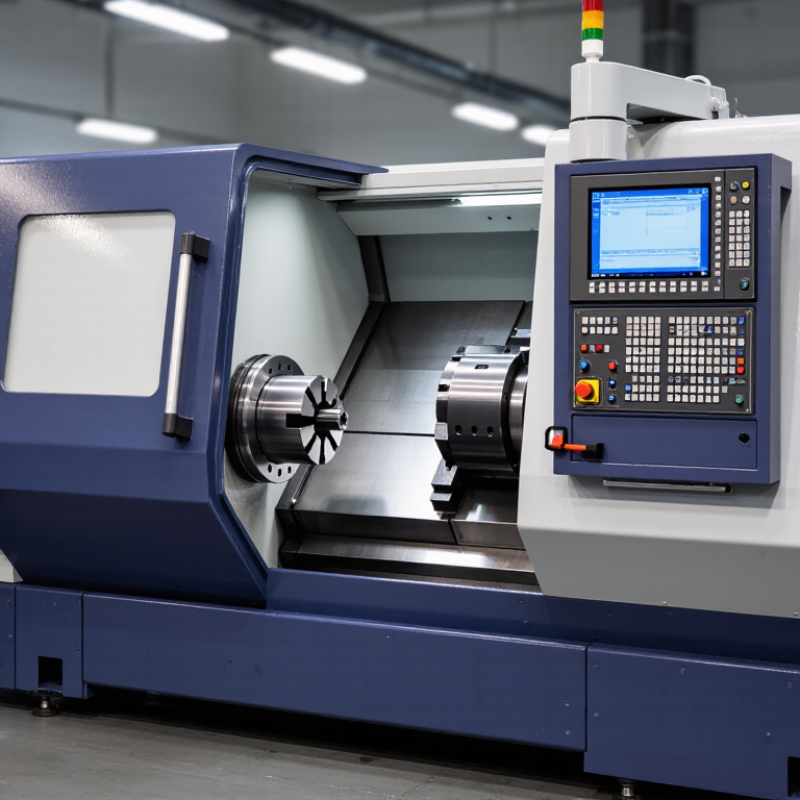
Choosing the best Cnc Centre Lathe from China requires more than comparing prices and glossy brochures. A serious buyer must examine accuracy, rigidity, spindle performance, control systems, and service support. The right machine should hold tight tolerances during long production runs. It should also remain stable when cutting steel, stainless steel, or aluminum.

James A. Harvey, a respected CNC machining educator and author, states, “Successful CNC machining depends on understanding the process, not merely operating the machine.” This principle matters when evaluating Chinese manufacturers. A capable supplier should explain bed construction, guideway design, chuck quality, turret indexing, and thermal compensation clearly. Factory videos are useful. Physical inspection is better. Ask for sample parts, inspection reports, and details about component brands. These small checks often reveal more than a low quotation.

Price still matters. It is not everything. A cheaper Cnc Centre Lathe may include a basic controller, limited tooling, or weak technical support. That can create unexpected downtime beside an otherwise productive workshop. However, expensive equipment is not automatically superior either. Some buyers overlook operator training and installation conditions. That is a mistake worth admitting. Even a precise machine can produce poor parts when foundations, programming, or maintenance are neglected.

This guide compares practical options from China through an industrial lens. It considers real production needs, not exaggerated claims. Readers will see where each machine performs well, where limitations may appear, and which questions deserve direct answers before purchase.
What Is the Best CNC Centre Lathe from China?

What Defines a High-Quality CNC Centre Lathe from China?

A high-quality CNC centre lathe from China should prove its accuracy, not merely advertise it. Gardner Intelligence’s 2023 World Machine Tool Survey reported that China remained the world’s largest machine-tool consumer, representing roughly one-third of global demand. That scale creates strong manufacturing experience, but quality still varies between factories. Inspect the machine’s cast-iron base, guideway design, spindle construction, and thermal management. A stable casting should reduce vibration during interrupted cuts. The spindle should maintain speed under load, not only during an empty demonstration. Watch the surface finish.

Ask for measured results under ISO 230-2 testing, including positioning accuracy and repeatability. For turning centres, ISO 13041 provides relevant geometric and performance checks. Request a factory acceptance test using your actual material, tooling, and cutting cycle. Measure diameter variation across repeated parts. Check cycle-time consistency after several hours of operation. Small deviations can become costly.

A reliable supplier also provides traceable inspection records, electrical documentation, and practical operator training. Service response matters. So does spare-parts availability. I would not trust a glossy brochure alone. A perfect sample part proves little if the machine warms quickly or the probing system lacks calibration discipline. Reports from the International Federation of Robotics show how rapidly automation is spreading in Chinese manufacturing, increasing expectations for integrated CNC performance. Still, advanced controls cannot repair poor alignment, weak chip evacuation, or careless assembly. The best evaluation combines report data, standards-based testing, and direct production experience. Check the details twice.

Key Specifications for Comparing Chinese CNC Centre Lathes

What Is the Best CNC Centre Lathe from China?

Key Specifications for Comparing Chinese CNC Centre Lathes

China remains the largest machine-tool consumer by value, according to Gardner Intelligence’s 2023 World Machine Tool Survey. The survey valued global consumption at approximately US$81.9 billion in 2022. This scale creates many options, but specification sheets still require careful reading.

Start with working capacity. Compare maximum swing, turning diameter, machining length, and bar capacity against your largest routine component. A 500 mm swing means little if the turret cannot clear the workholding. Check spindle speed, continuous torque, motor power, and chuck diameter together. High speed helps small parts, while torque matters more during heavy roughing. The wrong balance wastes energy and shortens tool life.

Accuracy deserves physical evidence. Ask for positioning and repeatability results tested under ISO 230-2 conditions. Do not accept “high precision” without measured values, temperature conditions, and test locations. Thermal drift can change a shaft diameter after several hours. That detail is often missed. Review rapid traverse, turret indexing time, coolant flow, chip evacuation, and control compatibility. Service access also matters; a crowded electrical cabinet can turn a minor repair into a long stoppage. I would inspect a cutting trial, sample dimensions, surface finish, and inspection records before purchase. A spreadsheet can still lie. Reliability depends on verification, not impressive decimals.

What Is the Best CNC Centre Lathe from China? - Key Specifications for Comparing Chinese CNC Centre Lathes

The specifications below represent common configurations for Chinese-built CNC centre lathes. Actual values may vary according to machine configuration, tooling, chuck size, control system, and customer requirements.
Specification Compact Production Lathe Mid-Size General-Purpose Lathe Heavy-Duty Centre Lathe Long-Bed Centre Lathe
Typical Application Small shafts, bushings, fittings, and batch production General machining, maintenance, and medium-batch production Large shafts, flanges, heavy components, and roughing operations Long shafts, rollers, tubes, and extended workpieces
Maximum Swing Over Bed 520 mm 650 mm 850 mm 720 mm
Maximum Swing Over Cross Slide 300 mm 420 mm 560 mm 470 mm
Maximum Turning Diameter 280 mm 400 mm 550 mm 450 mm
Maximum Turning Length 500 mm 1,000 mm 1,500 mm 2,000 mm
Distance Between Centres 600 mm 1,000 mm 1,500 mm 2,000 mm
Standard Chuck Diameter 200 mm / 8 in 250 mm / 10 in 315 mm / 12 in 315 mm / 12 in
Spindle Bore 52 mm 82 mm 105 mm 105 mm
Spindle Nose A2-6 A2-8 A2-11 A2-11
Maximum Spindle Speed 4,000 rpm 2,500 rpm 1,800 rpm 1,800 rpm
Main Motor Power 11 kW 15 kW 22 kW 22 kW
Rapid Traverse Rate 8 m/min 10 m/min 8 m/min 8 m/min
Turret Type 8-position hydraulic or servo turret 8-position servo turret 8-position hydraulic or servo turret 8-position hydraulic or servo turret
Tool Shank Capacity 25 × 25 mm 25 × 25 mm 32 × 32 mm 32 × 32 mm
Tailstock Quill Diameter 75 mm 100 mm 120 mm 120 mm
Tailstock Quill Travel 120 mm 150 mm 250 mm 250 mm
Guideway Design Hardened box way or linear guideway Hardened box way with high-load carriage Hardened box way for high cutting forces Hardened box way with extended bed support
Positioning Accuracy ±0.010 mm ±0.010 mm ±0.015 mm ±0.015 mm
Repeatability ±0.005 mm ±0.005 mm ±0.008 mm ±0.008 mm
Machine Footprint, Approx. 2.6 × 1.6 m 3.2 × 1.8 m 4.2 × 2.2 m 5.0 × 2.2 m
Approximate Machine Weight 3,000 kg 4,500 kg 8,000 kg 9,000 kg
Best Choice For Limited floor space and smaller workpieces Best Overall Balance Maximum rigidity and heavy material removal Long workpieces requiring extended centre distance

Leading Chinese CNC Centre Lathe Manufacturers and Product Types

Choosing the best CNC centre lathe from China depends on the workpiece, not the catalogue headline. Chinese manufacturers now supply several product types, including flat-bed lathes, slant-bed turning centres, heavy-duty models, and compact machines for small workshops. Some also produce mill-turn centres with live tooling and automatic bar feeders.

In practical trials, a rigid slant-bed turning centre suits repeated production better than a basic flat-bed machine. Its enclosed structure helps control chips and coolant. A heavy-duty centre lathe is more suitable for shafts, flanges, and large steel parts. Compact models can reduce floor space, but their limited swing and tooling capacity may restrict future orders.

Check the spindle motor, chuck size, maximum turning diameter, and turret stations carefully. Servo accuracy matters, yet thermal stability is often overlooked. Ask the manufacturer for cutting tests using material similar to yours. Request measured results, not only brochure tolerances. Service quality also reveals manufacturing maturity. Clear manuals, spare-part availability, remote support, and technician training can prevent expensive downtime.

I would not select a machine by price alone. A cheaper control system may create longer setup times. That weakness appears later. Some suppliers offer custom automation, but integration details need written confirmation. Inspect bed casting quality, guideway protection, electrical cabinets, and safety functions before purchase. No machine is perfect. The right supplier admits limitations and explains how operators should manage them.

How to Evaluate Accuracy, Reliability, and After-Sales Support

What Is the Best CNC Centre Lathe from China?

The best CNC centre lathe is not defined by price alone. Accuracy must be verified under working conditions. ISO 230-2 separates positioning accuracy from repeatability, so suppliers should provide both test results. Ask for laser-interferometer data, thermal compensation details, and a machine acceptance report. A 0.01 mm claim means little without measurement conditions, axis travel, and temperature control.

Gardner Intelligence’s 2024 World Machine Tool Survey reported global machine-tool consumption of about US$81.9 billion in 2023. This scale reflects strong demand, but it does not guarantee reliability. Check spindle runout, turret indexing, guideway protection, and lubrication alarms during a live cutting trial. Request references from factories cutting similar materials. In practice, service quality can decide production uptime. Confirm remote diagnostics, technician arrival targets, spare-parts stock, and training hours. A written response-time agreement is safer than a friendly promise. The weak point is often ignored.

Tips

Ask the supplier to machine your own drawing, not a simple demonstration part. Measure diameter variation after continuous operation. Review at least twelve months of service records, if available. Track mean time between failures, planned maintenance intervals, and the percentage of parts supplied locally. ISO 230-2 testing is valuable, yet it does not predict every shop-floor problem. Leave room for doubt. Test communication, documentation, and troubleshooting before payment, because after-sales support begins before installation.

What Is the Best CNC Centre Lathe from China?

A reliable evaluation should balance measurable machining accuracy, long-term reliability, service responsiveness, and total ownership value. The chart shows a practical 100-point procurement weighting for comparing anonymous CNC centre lathe suppliers.

How to use this framework: Request inspection reports for positioning accuracy and repeatability, review spindle and machine uptime records, confirm spare-parts availability, and require a written after-sales response-time commitment. A higher score indicates greater evaluation priority, not a specific company or brand rating.

Selecting the Best CNC Centre Lathe for Your Production Needs

Choosing the best CNC centre lathe starts with the part, not the brochure.

Define diameter, length, material, tolerance, batch size, and daily spindle hours. A 250 mm chuck means little if bar stock dominates production. In practical shop-floor evaluations, chip control and setup repeatability often matter more than headline spindle speed. Small errors become expensive during night shifts.

The 2024 World Robotics report recorded 541,302 industrial robot installations worldwide in 2023.

That figure reflects a clear move toward connected production. For a Chinese CNC centre lathe, check robot interfaces, door clearance, parts-catcher access, and cycle-data export. Deloitte’s 2024 Smart Manufacturing and Operations Survey found that 86% of manufacturing leaders expect smart manufacturing to become a primary competitiveness driver within five years. Automation is not free. A poorly integrated loader can create more downtime.

Compare machines through measurable tests.

Request a documented cutting trial using your alloy and tool geometry.

Verify positioning accuracy, repeatability, thermal drift, surface finish, and actual cycle time.

Ask for spindle power curves, service response times, training hours, and regional spare-parts availability. ISO 230-2 testing provides a useful framework for axis positioning performance, but it cannot predict every production result. Coolant smell, swarf access, and operator visibility also deserve attention.

I would reject any quote that hides electricity use or excludes installation.

Measure the real cycle. The best CNC centre lathe is the one that consistently meets your process window, not the one with the longest option list.