
No Job is Too Big or Too Small!

10 Best Lithium Batteries for Global Buyers in 2026

Choosing among the 10 Best Lithium Batteries for Global Buyers in 2026 takes more than comparing prices. Buyers need to match chemistry, capacity, voltage, cycle life, and battery-management features to the intended application. A compact battery for a communications backup system may not suit a marine installation or an off-grid home. The label is only the start.

At Tesla’s 2015 Powerwall launch, Elon Musk famously remarked, “The problem with existing batteries is that they suck.” The blunt line points to a practical issue: real-world performance depends on more than a product’s headline capacity. Installation conditions, charging habits, operating temperature, and after-sales support all matter. Look closely at test conditions and warranty terms. Ask for documentation.

This guide compares leading options through details global buyers can verify: specifications, manufacturer support, safety information, and suitability for different use cases. Requirements and available service can vary by market, so confirm local product documentation before purchasing. A battery may look excellent on paper. It may disappoint in a hot equipment room, or when replacement parts are hard to obtain. That deserves a second look. The goal is not to name one universal winner, but to help readers identify a dependable fit—and recognize where product claims still leave questions unanswered.
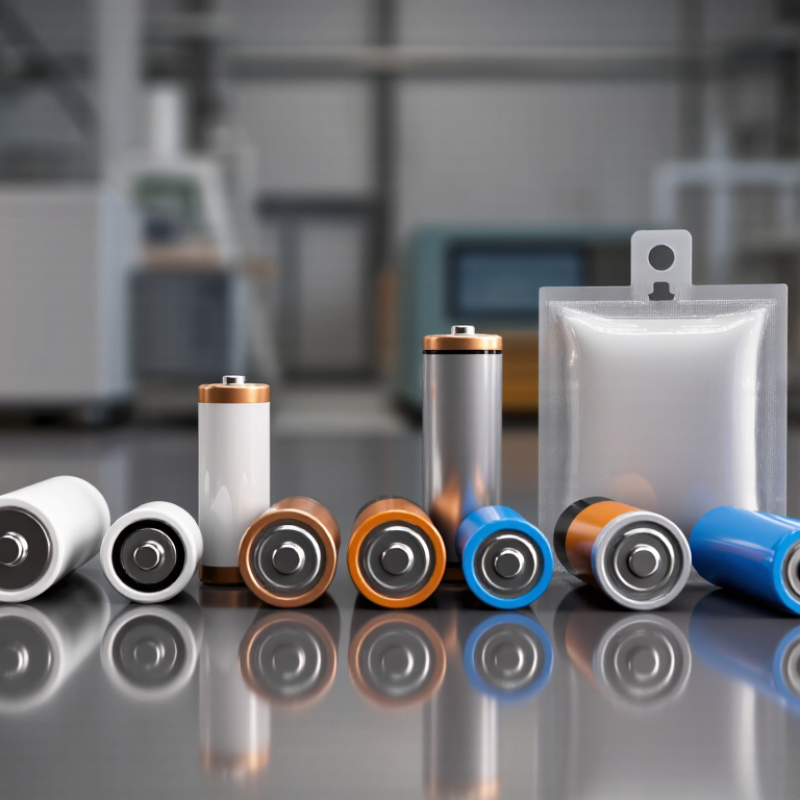
10 Best Lithium Batteries for Global Buyers in 2026

Understanding Lithium Battery Types and Their Main Applications

Lithium batteries are not one uniform product; their chemistry shapes energy, lifespan, charging behavior, and safety needs. Buyers should match these traits to the equipment, climate, and service schedule, not just compare capacity. Lithium iron phosphate (LFP) cells generally offer long cycle life and good thermal stability, but less energy per kilogram than many nickel-based designs. This makes them common in stationary storage and some electric vehicles, where space is less critical. NMC and NCA chemistries suit electric vehicles and portable equipment when compact, high-energy packs matter.

Lithium titanate (LTO) tolerates frequent charging and many cycles, but lower energy density can mean a heavier, larger pack. It appears in demanding fleet, industrial, and backup-power settings. Primary lithium cells are non-rechargeable and often serve sensors, meters, and devices that need long shelf life. Do not confuse them with rechargeable lithium-ion packs. Chemistry matters. Temperature, charging controls, enclosure design, and replacement access also affect a battery’s practical performance. Test the complete battery in real operating conditions; published cell figures do not tell the whole story. These trade-offs are not always neat, especially when operating conditions vary.

Key Factors for Comparing Lithium Batteries in 2026

Comparing lithium batteries in 2026 takes more than matching the largest capacity to the lowest price. Start with the job: a cabin’s daily load, a delivery vehicle’s stop-start pattern, or backup equipment waiting through long idle periods. Check usable energy, not just the headline capacity, and compare continuous and peak discharge ratings against the actual load. Small details matter. A battery that fits the cabinet but cannot handle a brief motor surge may disappoint.

Chemistry affects weight, thermal behavior, and expected service life, while the battery management system helps monitor cells and control charging. Ask how cycle-life figures were measured; temperature, depth of discharge, and charge rate can change the result. Check operating limits against the site’s real conditions, such as a cold shed or a hot equipment room. Also review warranty terms, traceable test documents, protection features, and support availability in the destination market. A neatly printed specification sheet is not proof of consistent quality. Compare models using the same test assumptions, and verify that the charger and installation design are compatible. I would still leave room for doubt: published numbers do not capture every installation, and supplier answers deserve checking.

Ten Leading Lithium Battery Options for Global Buyers

Ten leading lithium battery options for global buyers include lithium iron phosphate (LFP), nickel-rich NMC 811, balanced NMC 622 and NMC 532, nickel-cobalt-aluminum (NCA), lithium manganese oxide (LMO), lithium cobalt oxide (LCO), lithium titanate (LTO), lithium manganese iron phosphate (LMFP), and emerging solid-state lithium designs. Each suits a different job. LFP favors long cycle life and lower material cost; NMC and NCA pack more energy into limited space. LTO charges quickly and handles frequent cycling, but often costs more and stores less energy per kilogram. LCO remains common in compact electronics, while solid-state cells are not yet a routine, proven choice for most large-scale orders. Fit matters.

The International Energy Agency’s Global EV Outlook 2024 reported that LFP supplied nearly 40% of the global electric-car battery market in 2023. BloombergNEF reported an average lithium-ion pack price of US$115 per kilowatt-hour in 2024, down 20% from 2023. These are market-wide figures, not guaranteed supplier quotes. Buyers should compare usable capacity, operating temperature, cycle-life test conditions, warranty terms, and documented safety testing—not chemistry labels alone. Ask for test results under your expected load. A battery rated for a mild laboratory cycle may perform differently in a hot container or a vehicle making repeated short trips. That distinction is easy to miss.

Matching Battery Types to Different Uses and Markets

Matching a lithium battery to its market means looking beyond capacity. LFP batteries suit many stationary systems and commercial fleets, where cycle life and thermal stability matter. NMC packs can offer higher energy density for weight-sensitive vehicles and portable equipment. For equipment charged frequently, lithium titanate may be worth assessing, though its lower energy density can be a drawback. No chemistry wins everywhere.

Scale matters. The IEA’s Global EV Outlook 2025 estimates electric-car battery demand reached about 1 TWh in 2024, while its Batteries and Secure Energy Transitions report records 42 GW of battery storage additions in 2023. These figures point to different buying priorities: vehicles need range and mass efficiency; storage projects often value service life and predictable output. Climate changes the calculation, too. A cold warehouse or a hot roadside cabinet can affect usable performance. I would not treat a global average as a local quote; regional supply, warranty terms, and test conditions differ.

Tips: Compare usable energy, cycle-life conditions, temperature limits, and service access—not just the label capacity. Ask suppliers for test data under your expected load. Small detail, big difference.

10 Best Lithium Batteries for Global Buyers in 2026 - Matching Battery Types to Different Uses and Markets

A practical comparison of lithium battery chemistries and formats. “Best” depends on the application, operating conditions, safety requirements, and total cost of ownership.

Battery Type Rechargeable? Typical Nominal Voltage Key Characteristics Best-Fit Applications Common Buyer and Market Fit Important Selection Checks
Lithium iron phosphate (LFP) cells and packs Yes About 3.2 V per cell Strong thermal stability and long cycle-life potential; generally lower energy density than nickel-rich lithium-ion chemistries. Stationary energy storage, solar systems, backup power, and electric vehicles where durability is prioritized. Residential and commercial storage buyers, utilities, and fleet operators across global markets. Check pack-level safety design, battery-management system, temperature limits, usable capacity, and applicable transport and installation requirements.
12.8 V LFP deep-cycle battery packs Yes 12.8 V nominal for a common 4-cell series pack Lightweight alternative to many lead-acid deep-cycle batteries; requires a compatible charging profile and battery-management system. Recreational vehicles, marine house-power systems, and off-grid equipment. RV, boating, and off-grid buyers seeking a drop-in-style battery, subject to system compatibility. Confirm charging-system compatibility, low-temperature charge protection, continuous current rating, and physical fit; “drop-in” does not guarantee compatibility with every system.
Nickel manganese cobalt (NMC) lithium-ion Yes Typically about 3.6–3.7 V per cell Offers a balance of energy density, power, and cost; performance and safety characteristics vary with cell design and chemistry ratios. Electric vehicles, e-bikes, and portable or industrial battery packs. Vehicle and equipment manufacturers needing compact, high-energy rechargeable packs. Review thermal management, protection electronics, cell qualification, warranty terms, and pack-level test documentation.
Nickel cobalt aluminum oxide (NCA) lithium-ion Yes Typically about 3.6–3.7 V per cell High energy density; requires carefully engineered charging, monitoring, and thermal protection. Long-range electric vehicles and other applications where stored energy per unit of mass is important. EV and mobility buyers prioritizing range and compact battery design. Assess pack-level safety architecture, thermal control, supplier traceability, service procedures, and market-specific vehicle requirements.
Lithium manganese oxide (LMO) lithium-ion Yes Typically about 3.7 V per cell Can support high power output; cycle life and energy density depend on cell design. It is also used in blended chemistries. Power tools, medical equipment, and some mobility or vehicle battery designs. Equipment makers and buyers who need strong power delivery in a compact pack. Match discharge-current ratings to the load and verify thermal limits, cycle-life data, and whether the pack uses a blended chemistry.
Lithium cobalt oxide (LCO) lithium-ion Yes Typically about 3.6–3.7 V per cell High energy density in compact cells; thermal and cycle-life limits make pack design and protection important. Phones, cameras, laptops, and other compact consumer electronics. Consumer-electronics manufacturers and replacement-pack buyers requiring compact energy storage. Check exact cell dimensions, protection circuitry, operating limits, and device compatibility; avoid using cells outside their approved pack design.
Lithium titanate (LTO) lithium-ion Yes Typically about 2.3–2.4 V per cell Known for high power capability, fast-charge potential, and long cycle-life potential; lower energy density and higher cost can be trade-offs. Frequent-charge transit systems, industrial equipment, and applications with demanding power or cycle requirements. Transit, industrial, and fleet operators evaluating lifetime performance rather than lowest initial cost. Confirm the charger and system are designed for LTO voltage limits, and compare measured cycle-life data under the intended duty cycle.
Lithium-ion pouch cells Yes Chemistry-dependent; commonly about 3.6–3.7 V per cell for NMC- or LCO-based designs A cell format rather than a distinct chemistry; lightweight and space-efficient, but pouch cells need suitable mechanical support and swelling management. Portable electronics, drones, and custom lightweight battery packs. Product designers and manufacturers with tight space or weight constraints. Specify the actual cathode chemistry, cell dimensions, tab configuration, compression or enclosure design, and validated pack protection.
Lithium manganese dioxide (Li-MnO₂) primary cells No; primary, non-rechargeable About 3.0 V per cell Provides a stable voltage profile and long storage life in suitable designs; must not be recharged. Coin-cell electronics, cameras, meters, and other low-to-moderate-drain devices, depending on cell format. Electronics and instrument buyers needing long-life, replaceable primary cells. Match the exact cell size, pulse-current needs, temperature range, and device requirements; provide appropriate end-of-life and recycling guidance.
Lithium thionyl chloride (Li-SOCl₂) primary cells No; primary, non-rechargeable About 3.6 V per cell High energy density and low self-discharge in suitable designs; voltage delay can occur after long storage or under certain loads. Utility meters, remote sensors, and other low-current devices designed for long service intervals. Infrastructure, metering, and industrial IoT buyers seeking long-duration primary power. Check pulse-load requirements, voltage-delay behavior, temperature range, cell construction, and handling rules; never recharge or short-circuit these cells.

Buyer note: Voltage and performance figures are typical cell-level values, not guarantees for every product. Cycle life, usable energy, charging limits, and safety depend on cell design, pack engineering, operating conditions, and test methods. Verify current market-specific certifications and transport documentation, including applicable UN 38.3 testing requirements.

Safety Standards, Certifications, and Sourcing Considerations

For global buyers, a lithium battery’s safety claims matter only when they match the exact product being shipped. Check whether test reports identify the cell, pack configuration, and production site. A certificate for a similar model may not cover your order. Look for relevant standards, such as IEC 62133-2 for portable applications or IEC 62619 for industrial batteries. UN 38.3 test documentation is also important for transport. Paperwork first.

Ask suppliers for reports from qualified laboratories, clear serial-number traceability, and written change-control procedures. A small change in cell type or battery management system can affect performance and safety. Inspect sample packs for secure terminals, readable labels, and consistent assembly. Then test them under your actual load and temperature conditions. Datasheets alone are not enough.

Sourcing decisions also depend on local market requirements, service capacity, and end-of-life handling. Confirm who manages warranty claims and how replacement units will be supplied. Review factory audit records where available, but treat an audit as a snapshot, not a guarantee. Lead times can shift, and documentation can be incomplete; allow time to resolve gaps before placing a large order. No single certificate answers every question.