
No Job is Too Big or Too Small!

10 Best Pick And Place Robots for Global Buyers?

Choosing the right Pick And Place Robot can reshape a production line within weeks. It can also create expensive problems when buyers trust speed alone. This guide introduces ten leading solutions for global manufacturers, integrators, and growing workshops.

Jeff Burnstein, president of the Association for Advancing Automation, has said, “Robots do not take jobs; they change jobs.” His observation remains useful when evaluating automation. A robot may move bottles, cartons, trays, or electronic parts with remarkable consistency. However, people still define quality standards, manage exceptions, and maintain safe operations. The best system supports workers instead of treating them as an afterthought.

Our selection considers payload, reach, cycle time, repeatability, vision compatibility, gripper design, programming effort, energy use, and service availability. These details matter on the factory floor. A four-axis robot may excel beside a conveyor, while a compact delta robot may better handle lightweight food packages. A six-axis model offers flexibility, but its higher complexity can challenge smaller teams. The fastest machine is not always the wisest choice.

Real-world performance varies. Dust, vibration, product changes, and inconsistent positioning can reduce advertised output. That deserves honest attention. Buyers should request application trials, inspect maintenance access, and compare total ownership costs. Rankings can guide research, but they cannot replace testing the robot with actual products, speeds, and operators. Mistakes happen. Careful evaluation reduces them.
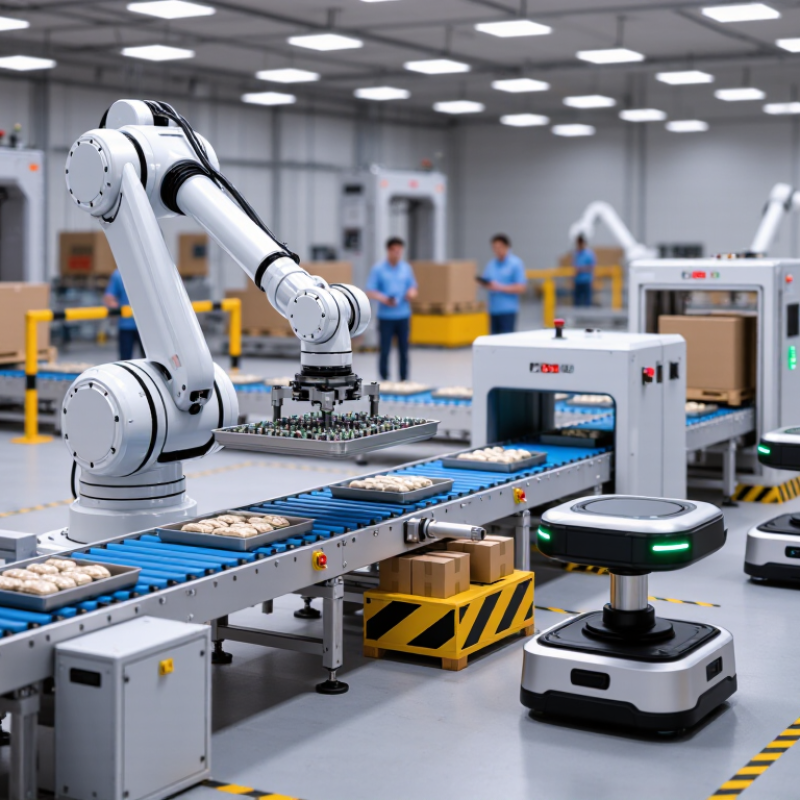
10 Best Pick And Place Robots for Global Buyers?

What Are Pick-and-Place Robots and How Do They Work?

Pick-and-place robots are automated machines that collect an item, move it, and place it elsewhere. They often handle boxes, trays, components, or packaged goods. A typical system combines a robot arm, gripper, vision camera, conveyor, and control software. The camera identifies an object’s position and orientation. The controller then calculates a safe movement path. The gripper closes around the item, lifts it, and releases it at a programmed location. Some systems use suction cups. Others use fingers, magnets, or custom tooling. The correct choice depends on weight, surface texture, shape, and production speed.

The International Federation of Robotics reported 541,302 industrial robots installed worldwide in 2023. This figure shows the scale of factory automation, although it does not isolate pick-and-place applications. Speed is not the only measure of performance. Placement accuracy, changeover time, product damage, and operator safety matter equally. Vision systems can struggle with glare, transparent packaging, or overlapping products. That detail is easy to underestimate. A poorly designed gripper may cause jams every few minutes, wasting more time than manual handling. The Association for Advancing Automation also emphasizes application-specific integration, testing, and safeguarding. Buyers should review cycle-time tests, payload limits, reach, error recovery, and compliance with standards such as ISO 10218. Real production trials remain essential. Laboratory success can be misleading.

Key Criteria for Comparing Pick-and-Place Robots Worldwide

10 Best Pick And Place Robots for Global Buyers?

Comparing pick-and-place robots worldwide requires more than checking speed. The IFR World Robotics 2024 report recorded 541,302 industrial robot installations in 2023. That scale shows strong demand, but it also raises a practical question: will the robot fit your process?

Assess payload with the gripper and product included. Measure reach at the actual pickup and drop-off points.

A robot rated for 120 picks per minute may slow sharply after vision checks, product variation, and conveyor gaps. Cycle time matters. So does repeatability.

Inspect the operating environment carefully. Food lines may require washdown protection, while dusty warehouses need suitable sealing. Check the robot’s IP rating, temperature range, safety functions, and local service coverage.

Interact Analysis has identified logistics, packaging, and food applications as important growth areas in industrial automation reports. Therefore, integration flexibility deserves serious attention.

Compare controller compatibility, vision interfaces, spare-part access, training, and total cost over five years.

Energy use is often overlooked. So are software licenses.

Request a live trial using your smallest and most unstable products. Real products reveal more than brochures.

One weakness remains. Published cycle rates are rarely measured under identical conditions. Buyers should record their own test data before selecting any of the ten leading candidates.

Reliability is not a slogan; it is stable performance across long shifts.

The 10 Best Pick-and-Place Robots for Global Buyers

The 10 Best Pick-and-Place Robots for Global Buyers should be judged by application, not advertising claims. The shortlist should include delta, SCARA, six-axis, collaborative, gantry, vision-guided, hygienic, high-speed, compact, and palletizing robots. Each design solves a different handling problem.

According to the International Federation of Robotics’ World Robotics 2024 report, 541,302 industrial robots were installed worldwide in 2023. More than 4.28 million industrial robots were operating globally. These figures show strong automation demand, but they do not guarantee a suitable purchase. A food processor may need stainless construction, washdown protection, and gentle gripping. An electronics factory may value repeatability below 0.02 millimeters and stable cycle times. Warehouse users often need longer reach, heavier payloads, and reliable vision performance.

Look beyond advertised speed. Check the complete cycle, including gripping, inspection, movement, and release. The International Federation of Robotics also identifies labor shortages and productivity pressure as major automation drivers. However, a faster robot can create jams when conveyors, sensors, or packaging vary. That detail is often missed. Global buyers should compare payload at full reach, controller language support, safety certification, spare-part access, and local service response. Total cost matters more than the initial quotation. No ranking is perfect. Real samples, measured cycle tests, and operator feedback should challenge every supplier claim before installation.

Robot Selection by Industry, Payload, Speed, and Reach

The ten best pick-and-place robots are not identical winners; they fit different production realities. The IFR World Robotics 2024 report recorded 541,302 industrial robot installations in 2023, showing strong automation demand. Yet volume alone should not guide selection. Food and packaging lines often need hygienic delta robots with high cycle rates. Electronics assembly favors compact SCARA systems. Heavy automotive components require articulated robots with higher payloads.

Payload must include the gripper, cables, and product, not only the product weight. A 2-kilogram part may need a 5-kilogram robot rating after acceleration forces are considered. Speed figures can also mislead. Compare cycle time under the actual motion path, not an empty laboratory test. Reach should cover the complete work envelope, while leaving space for guarding and maintenance access. Too much reach can reduce stiffness and waste floor space.

In factory assessments, I check product spacing, transfer height, surface grip, and cleaning conditions before comparing models. ISO 9283 provides useful methods for evaluating robot accuracy and repeatability. Safety design should also reflect ISO 10218 requirements and the real cell layout. A spreadsheet helps, but it can still hide poor handoff timing. Small errors accumulate. Global buyers should request tested cycle samples, payload charts, service response details, and documented integration limits before ranking their final ten.

Global Purchasing, Integration, Safety, and Maintenance Factors

Global buyers should evaluate pick and place robots beyond speed and payload.

Purchasing begins with a clear production study. Measure product weight, transfer distance, cycle time, and available floor space. A robot that performs well in one plant may struggle elsewhere. Voltage, communication protocols, guarding requirements, and spare-part availability also differ between regions.

Integration needs practical planning.

Confirm conveyor height, tooling access, vision accuracy, and software compatibility before signing a purchase order. Ask the supplier for installation drawings, test data, training materials, and remote-support procedures. During factory acceptance testing, use real products and realistic cycle conditions. Clean samples can hide feeding problems. That mistake is common. Local technicians should understand calibration, troubleshooting, and emergency procedures. Translation quality matters too.

Safety cannot be treated as an accessory.

Conduct a risk assessment for pinch points, unexpected motion, dropped products, and restart conditions. Interlocked guards, emergency stops, safe speed settings, and clear operator instructions need verification after installation. Maintenance planning should include lubrication intervals, sensor cleaning, gripper inspection, and backup procedures. Keep critical components in controlled storage, not beside a dusty production line. Remote diagnostics can reduce downtime, but access must be controlled and documented. No system is perfect. Early projects often underestimate changeover time and operator training. Reviewing those weaknesses honestly leads to better robot selection and more reliable global deployment.