2026 How to Choose the Best Plastic Parts for Your Project?
When embarking on a project involving plastic parts, choosing the right components is crucial. The global plastic parts market is projected to reach $650 billion by 2026, highlighting their significance across various industries. Selecting the appropriate plastic materials directly impacts product durability, performance, and cost-effectiveness.
Understanding the specific requirements of your project is vital. Each application may demand different attributes, such as chemical resistance, temperature tolerance, or mechanical strength. Reports indicate that over 70% of product failures are linked to inadequate material selection. Therefore, having a reliable method for evaluating options is essential for any successful project.
However, the plastic parts industry faces challenges, including sustainability concerns and evolving regulations. Designers often overlook the long-term environmental implications of their choices. Balancing innovation with responsibility remains a complex issue that deserves careful consideration. Engaging with experienced professionals can provide valuable insights to navigate these complexities effectively.

Understanding the Different Types of Plastic Materials Available
When selecting plastic materials for your project, it's essential to understand their different types and properties. Plastics can vary greatly in strength, flexibility, and durability. Common types include polyethylene, polypropylene, and polycarbonate. Each serves unique purposes, so understanding these options is vital for achieving the desired results.
Tips: Consider the environment where the plastic will be used. Some plastics resist moisture better than others. If your project might be exposed to harsh conditions, choose a material with proven resilience.
While plastic offers many advantages, it's important not to overlook its limitations. For example, certain plastics can degrade under
UV light. Reflect on the long-term viability of your material choice. Will it hold up? How often will it need replacement?
Tips: Test samples in real conditions if possible. This can prevent costly errors later. Don’t ignore the advice of experienced professionals. They can provide insights that improve your project’s outcome.
Evaluating the Mechanical Properties of Plastics for Project Needs
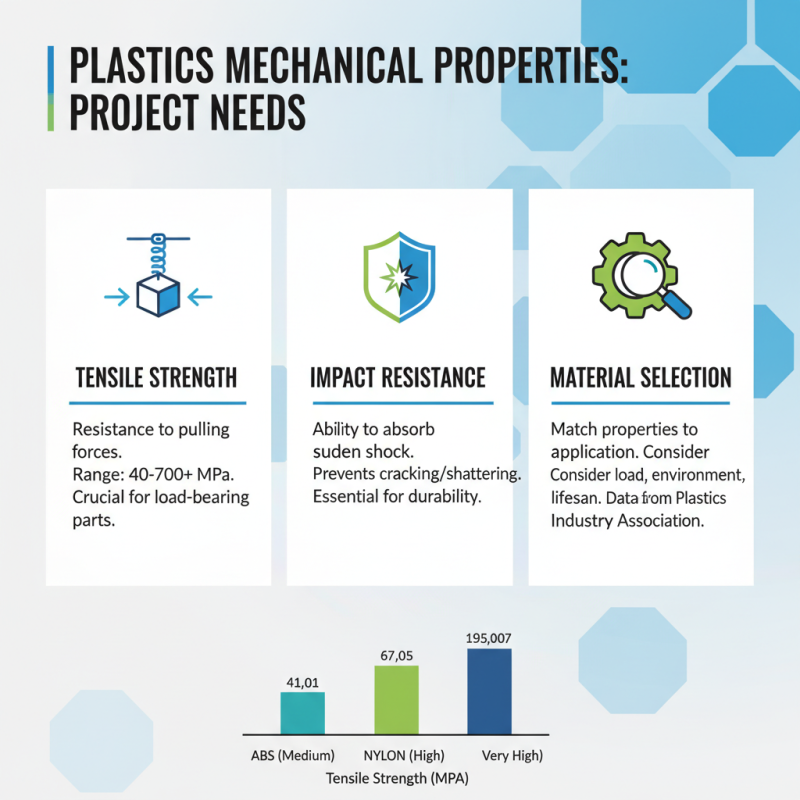
Selecting the right plastic parts for a project involves careful evaluation of mechanical properties. Different plastics exhibit unique characteristics. For example, tensile strength and impact resistance can significantly affect a part's performance. According to the Plastics Industry Association, tensile strength can range from 40 MPa to over 700 MPa among various materials. This variability is essential for ensuring that the chosen plastic can withstand specific load conditions.
Impact resistance is another critical factor. Some applications require materials that can endure sudden shocks. Polycarbonate, for instance, has excellent impact resistance, making it ideal for safety equipment. However, the trade-off may include lower chemical resistance compared to other plastics, like polyethylene. It is crucial to balance these properties based on the specific demands of your project. Consider if the compromise on one property leads to potential failures or inefficiencies.
Additionally, thermal properties must not be ignored. The glass transition temperature (Tg) of plastics affects their performance under heat. Materials like nylon have a Tg of around 50°C, while others might not perform well above room temperature. This could lead to deformation or functionality loss if not properly assessed. The task lies in navigating these mechanical properties to align with project goals. Choosing the correct plastic is often a mix of empirical data and trial-and-error.
Considering Environmental Factors and Sustainability in Plastic Selection
Choosing the right plastic parts for your project involves careful consideration of environmental factors. Sustainability is vital in today’s manufacturing landscape. Selecting Eco-friendly materials can reduce your project’s carbon footprint. Biodegradable plastics are a great option. They decompose more quickly than traditional plastics, minimizing long-term waste.
It's also essential to consider
recycling potential. Not all plastics are easily recyclable. Research the types of plastic that can be processed effectively in your region. Use local recycling guidelines as a reference. This promotes a circular economy, reducing the need for virgin materials.
Additionally, sourcing materials responsibly matters. Transparency in the supply chain can enhance the credibility of your project. Engage suppliers committed to sustainable practices. This may involve higher initial costs but contributes to a healthier planet. Each choice you make reflects your commitment to the environment. Reflect on the
long-term impact of your material choices.
Analyzing Cost Implications and Budget Constraints for Plastic Parts
When selecting plastic parts, cost implications play a crucial role.
Understanding your budget constraints is vital. Analyzing material types and their costs helps make informed decisions. Transparent communication with suppliers ensures you stay within budget. Some plastics are more affordable but may lack durability. Be wary of choosing solely based on price.
Consider the long-term costs of materials. Cheaper parts might save money upfront but can lead to higher replacement costs. It’s essential to evaluate not just the purchase price, but also maintenance and longevity. Re-evaluate suppliers who offer better quality at a slightly higher cost. Sometimes, the investment pays off in reduced failure rates.
Don’t overlook the importance of scalability in your project. Often, lower production runs might lead to higher costs per unit. As you scale up, the price may decrease, easing budget strains. Reassess your project's needs frequently. This will ensure that you’re making cost-effective choices while maintaining quality standards.
Techniques for Testing and Prototyping Plastic Components Before Final Use
Testing and prototyping plastic components are crucial steps in project development. According to industry reports, around 30% of product failures stem from material selection issues. Poorly chosen plastic parts can lead to unexpected performance problems, impacting the end product’s reliability.
When testing plastic components, consider both mechanical and thermal properties. Use techniques like tensile strength tests and thermal analysis to ensure the material holds up under stress. It’s vital to simulate real-world conditions during prototyping. This helps identify potential weak points early in the design process. Remember, an effective prototype can save time and costs.
Tip: Always conduct iterative testing. Each version of your prototype should undergo thorough evaluation. This helps refine the design and material choices. The goal is to create components that are not only functional but also durable.
Visual assessments are also important. Look for any deformities or unexpected behaviors during testing. These issues can provide insights into how the plastic behaves under different conditions. This reflection can significantly influence the final part selection and design revisions.