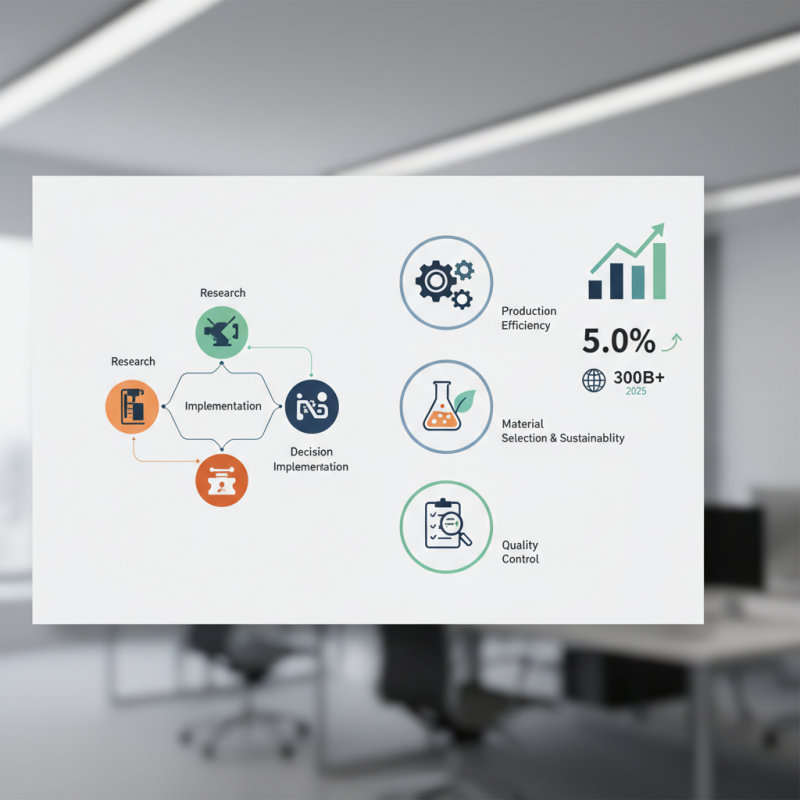
When selecting the best plastic molding solutions for your business, it is crucial to make informed decisions. The plastic molding industry is vast, with a projected growth rate of 5.0% annually, reaching a market size of over $300 billion by 2025. Understanding this landscape can significantly impact your business operations.
John Smith, a leading expert in plastic molding technology, emphasizes, "Choosing the right molding solution can be a game-changer for production efficiency." His insight reflects how vital these choices are for enhancing workflow and reducing costs. With the rise of automation and advanced materials in plastic molding, businesses must stay updated on industry trends and technologies.
However, navigating this complex field is not without challenges. Companies often face issues related to quality control and material selection. Reflecting on past decisions can reveal opportunities for improvement. By carefully evaluating available options, businesses can find the right plastic molding solutions that align with their goals and needs, creating lasting advantages in a competitive market.
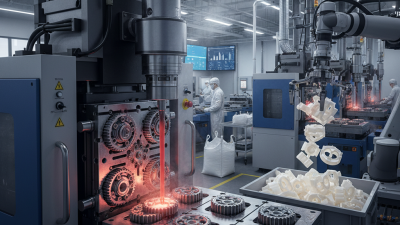
When considering plastic molding methods, it’s vital to understand their unique features. Injection molding is widely used for its efficiency. It allows the creation of complex shapes quickly. This method is ideal for high-volume production. However, it does require a significant upfront investment in molds. This can deter small businesses or startups.
Blow molding is another popular option. It's primarily used for producing hollow plastic parts, like bottles. The process involves inflating a heated plastic tube until it takes shape. It’s less costly than injection molding but may not deliver the same precision. Choosing between these methods often depends on the specific needs of your project.
Thermoforming is a viable choice for low-volume production. This process involves heating plastic sheets and forming them over molds. It’s a less expensive method but can yield less durable parts. Companies must consider their production goals and budget when deciding. Reflecting on these pros and cons is crucial before committing to a particular method. Proper research can save both time and resources.
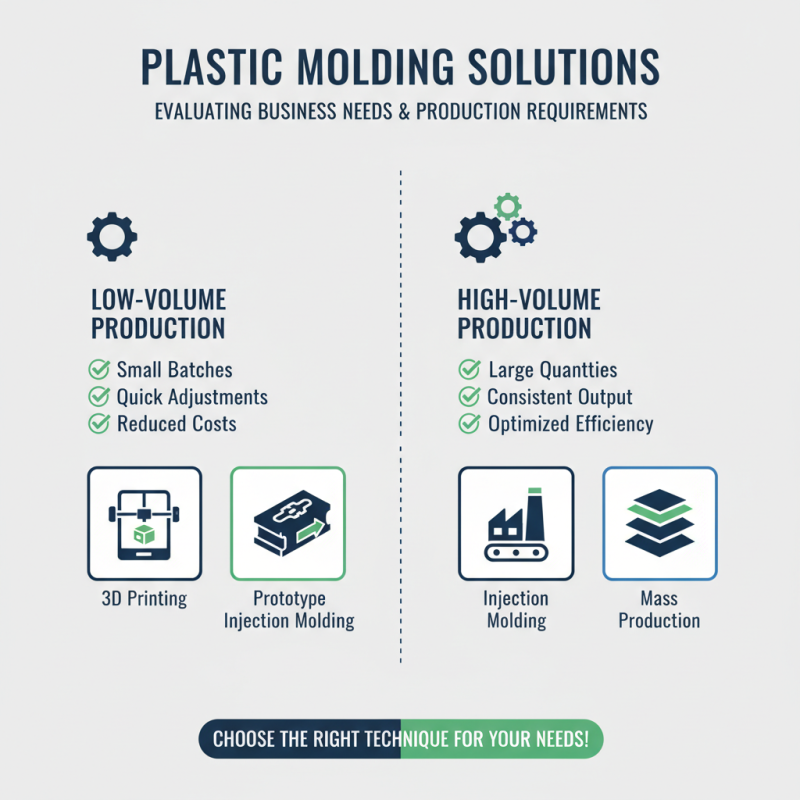
When considering plastic molding solutions, understanding your business needs is crucial. Begin by assessing your production requirements. What volumes do you need? Are you producing small batches or large quantities? Each scenario demands different molding techniques. For low-volume production, consider methods like 3D printing or prototype injection molding. These techniques often allow for quicker adjustments and reduced costs.
Think about the materials you plan to use. Different plastics have distinct properties. Some may offer durability while others provide flexibility. These choices can affect the final product's performance. It’s important to align material selection with the intended application. However, it’s also wise to be aware of potential limitations. For example, certain plastics may not be suitable for high-temperature environments.
Evaluate your budget carefully. While it may be tempting to choose the cheapest option, reliability often comes at a premium. Inconsistent quality can lead to higher long-term costs. The best solution balances cost and quality. Engaging with experienced professionals can provide valuable insights. Their expertise helps in navigating the complexities of plastic molding. Reflect on your decisions to ensure they align with both your immediate needs and long-term goals.
When evaluating the cost-effectiveness of various plastic molding solutions, businesses must consider several key factors. Research by the Plastics Industry Association indicates that plastic injection molding accounts for over 30% of all manufacturing processes in the U.S. This method is highly effective for large-scale production runs, offering a low per-unit cost over time. Yet, the initial setup costs can be significant. Companies may spend between $5,000 and $100,000 on molds, depending on complexity and size.
Another option, blow molding, is often preferred for hollow objects. It has a lower initial tooling cost compared to injection molding. However, the trade-off is typically higher production costs for smaller runs. A report from Grand View Research highlights that blow molding can reduce material waste by up to 20%, impacting long-term expenses.
A balance must be reached between initial investments and long-term savings. There could be a greater need for custom molding solutions that suit specific production needs. This approach can inflate costs, making it harder to gauge the real value. Each option has its merits and drawbacks, requiring careful consideration of production demands and budget constraints. Businesses should reevaluate their strategies regularly to align their molding solutions with evolving market needs.
Choosing the right plastic molding solutions involves understanding material compatibility and quality standards. Each type of plastic has unique properties. It's crucial to assess whether a material meets your project's specific requirements. Consider factors like temperature resistance, chemical exposure, and durability.
Tips: Always request material data sheets from your supplier. They provide essential information about the plastics you are considering.
Quality standards play a significant role in the manufacturing process. Ensure that the molding solutions you evaluate comply with industry regulations. Check for certifications related to safety and environmental impact. These documents confirm that the products are reliable and safe to use.
Tips: Engage with professionals who have experience in plastic molding. Their insights can help identify pitfalls and highlight successful strategies.
Selecting the wrong materials can lead to costly errors. This decision might affect product performance and customer satisfaction. Stay informed on advancements in plastic technology to improve your manufacturing processes. Quality should never be compromised for cost savings. Prioritize standards that reflect your commitment to excellence.
Choosing a reliable plastic molding partner is crucial for your business success. Look for manufacturers with proven experience in the industry. Their expertise can help avoid costly mistakes. A partner with a solid track record often has a portfolio showcasing their capabilities. Review their previous projects to assess quality and innovation.
Communication plays a key role in this partnership. Ensure the manufacturer understands your specific needs and timeline. They should be open to feedback and ready to make adjustments. A responsive partner reflects professionalism and dedication.
Additionally, consider their production capabilities. Advanced machinery can enhance quality and efficiency. It’s essential for your products to meet market demands. Still, it’s wise to question if they can scale operations as your business grows. Make sure to conduct a thorough evaluation before deciding.