Choosing the right polyvinyl chloride begins with the application, not the lowest quoted price. PVC may appear simple, yet its performance changes with formulation, temperature, additives, and manufacturing method. A rigid pipe, flexible cable jacket, medical tube, and outdoor window profile require different material properties. The best choice depends on what the product must survive.
Consider the working environment carefully. Will the material face sunlight, moisture, chemicals, impact, pressure, or repeated bending? A clear specification should include operating temperature, wall thickness, hardness, color, and expected service life. For example, a flexible PVC hose may feel suitable in a showroom but become brittle in cold storage. That small detail can create expensive failures later.
Experienced buyers also review technical data sheets, compliance documents, batch information, and supplier testing methods. Ask for evidence of tensile strength, elongation, flame behavior, UV resistance, and chemical compatibility. Independent testing can be valuable when safety or long-term reliability matters. Still, laboratory figures do not perfectly reproduce real conditions. My initial assumption that a higher-grade compound always performs better has often needed revision; design, processing, and installation matter too. Samples should be tested under realistic conditions, including heat cycles, bending, and contact with expected chemicals. A reliable supplier will explain limitations rather than promise universal performance. With careful comparison, polyvinyl chloride can offer practical durability, controlled cost, and consistent manufacturing results. The right material is rarely the most impressive one. It is the one that remains dependable after daily use, weather exposure, and ordinary human mistakes.
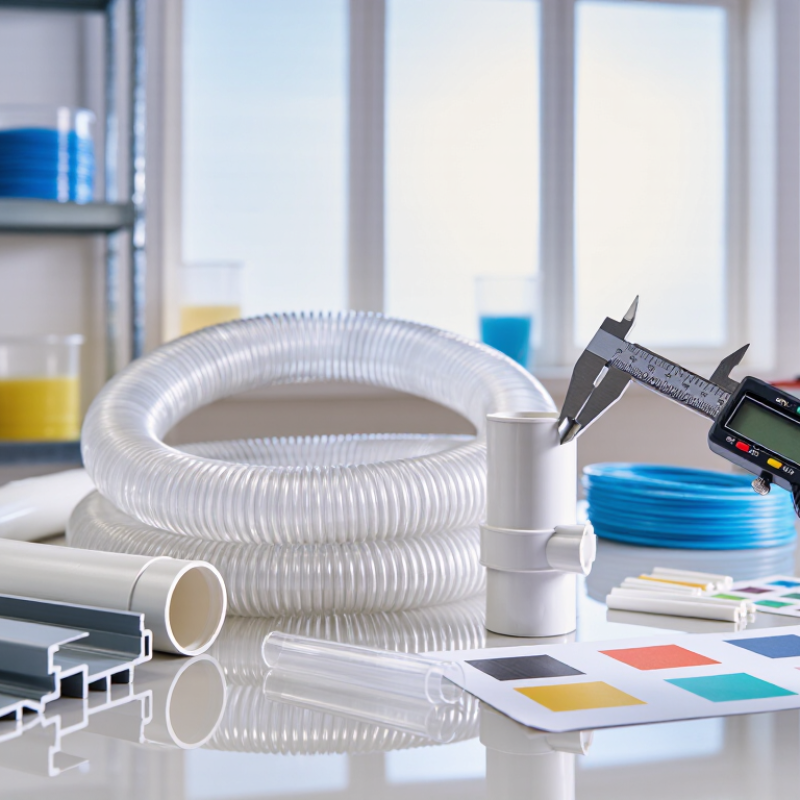
Polyvinyl chloride, or PVC, is a thermoplastic made from vinyl chloride monomer, chlorine, and carbon-based materials. Its chlorine content is about 57% by mass, according to PlasticsEurope’s Plastics—The Fast Facts 2023. This structure gives PVC useful resistance to moisture, chemicals, and corrosion. It can be rigid or flexible. That difference matters.
Rigid PVC appears in drainage pipes, electrical conduits, window profiles, wall panels, and medical packaging. Flexible PVC is used for cable insulation, flooring, hoses, seals, and protective films. In real installations, the material must match the environment. A pipe for cold water is not automatically suitable for hot fluid, pressure, or outdoor exposure. Small assumptions can become expensive failures.
The global PVC market was valued at about USD 40.25 billion in 2022, with growth expected through 2029, according to Fortune Business Insights’ PVC Market report. Demand is linked strongly to construction, infrastructure, healthcare, and electrical systems. When choosing PVC, check temperature limits, pressure ratings, impact strength, UV resistance, and plasticizer requirements. For drinking-water or medical contact, verify relevant standards and test certificates. The right choice is rarely based on price alone. Recycled content can reduce material demand, but its consistency may vary. That point deserves more scrutiny.
How to Choose the Right Polyvinyl Chloride PVC
PVC selection should begin with the application, not the lowest quoted price. Rigid PVC suits pipes, window profiles, and protective housings because it offers stiffness and chemical resistance. Flexible PVC works better for cable insulation, tubing, and soft flooring. Plasticizer content controls flexibility, but it can also affect durability, odor, and long-term performance.
Temperature is a critical property. PVC may become brittle in cold environments and soften under sustained heat. Check the expected operating range, pressure, sunlight exposure, and contact chemicals. For outdoor use, examine UV resistance and color stability. For electrical applications, verify insulation performance and flame behavior through reliable test data. In my experience, impact strength is often overlooked. A product that performs well indoors may crack during transport or winter installation.
Tips: Ask for technical data, test conditions, and batch consistency. Compare actual service conditions with laboratory results. Do not judge chemical resistance from a general chart alone; concentration and temperature can change the outcome. Consider processing requirements too, including cutting, welding, bending, or extrusion. A material that is difficult to install may increase labor costs and create weak points. No selection is perfect. Sometimes, a slightly more expensive formulation provides better reliability, while in other cases, it adds features the application never needs. Review the decision with engineers, installers, and safety specialists before final approval.
| Property | Typical Value or Range | Why It Matters | Best-Suited Applications | Selection Considerations | Common Test Method |
|---|---|---|---|---|---|
| Material Type | Rigid PVC (uPVC) Flexible PVC |
Determines stiffness, flexibility, impact behavior, and processing requirements. | Rigid: pipes, profiles, window frames, sheets Flexible: cable insulation, hoses, flooring, films |
Choose rigid PVC when dimensional stability is important. Choose flexible PVC when bending, softness, or strain relief is required. | ISO 1163 ASTM D1784 |
| Density | Approximately 1.30–1.45 g/cm³ | Affects component weight, material usage, buoyancy, and cost per volume. | All PVC products, including pipes, profiles, sheets, and molded parts | Plasticizers, fillers, pigments, and stabilizers can change the final density. Compare grades using the same formulation basis. | ISO 1183 ASTM D792 |
| Tensile Strength | Rigid PVC: commonly 40–60 MPa Flexible PVC: formulation-dependent |
Indicates the maximum tensile stress the material can withstand before failure. | Pressure pipes, structural profiles, sheets, electrical insulation, flexible tubing | Use higher-strength grades for pressure and load-bearing applications. Flexible formulations generally trade tensile strength for elongation. | ISO 527 ASTM D638 |
| Elastic Modulus | Rigid PVC: commonly 2,400–3,600 MPa | Measures stiffness and resistance to elastic deformation. | Building profiles, drainage pipes, conduit, rigid tanks, construction sheets | Higher modulus improves rigidity but may reduce impact tolerance. Temperature and plasticizer content strongly influence stiffness. | ISO 527 ASTM D638 |
| Elongation at Break | Rigid PVC: typically 20–80% Flexible PVC: often 150–400% or higher |
Shows how much the material can stretch before breaking. | Flexible cables, films, gaskets, medical tubing, flexible hoses | High elongation is useful for flexing and deformation. For rigid products, excessive elongation may indicate a formulation unsuitable for high stiffness. | ISO 527 ASTM D638 |
| Impact Resistance | Grade- and temperature-dependent | Determines resistance to sudden blows, handling damage, and installation impact. | Drainage pipes, conduit, outdoor profiles, protective housings, construction products | Impact performance usually decreases at low temperatures. Modified impact-resistant PVC may be preferred for exposed or mechanically demanding service. | ISO 179 ISO 180 ASTM D256 |
| Service Temperature | Typical continuous use: about −15 to 60°C for many formulations Short-term limits may be higher |
Controls dimensional stability, mechanical performance, and long-term reliability. | Indoor and outdoor piping, cable compounds, profiles, ducting, equipment housings | PVC becomes less impact-resistant at low temperatures and can soften or lose strength at elevated temperatures. Confirm the exact continuous-use rating for the formulation. | ISO 75 ASTM D648 Application-specific testing |
| Heat Deflection Temperature | Commonly about 55–75°C under standard test loads | Indicates resistance to deformation under heat and mechanical load. | Rigid molded parts, appliance components, profiles, pipe fittings, electrical enclosures | Select a higher-HDT grade when the part carries load at elevated temperature. HDT is not the same as the maximum service temperature. | ISO 75 ASTM D648 |
| Chemical Resistance | Generally good against dilute acids, alkalis, salts, and many aqueous chemicals | Determines whether the product can maintain integrity in contact with process fluids or cleaning agents. | Chemical drainage, wastewater piping, tanks, laboratory ducting, protective liners | Compatibility depends on concentration, temperature, exposure time, stress, and additives. Verify resistance against the exact chemical mixture. | ISO 175 ASTM D543 |
| Water Absorption | Typically below 0.1% by weight after 24 hours | Low absorption supports dimensional stability and electrical insulation in humid environments. | Pipe systems, conduit, outdoor profiles, electrical components, moisture-resistant housings | Although PVC itself absorbs little water, fillers, seams, coatings, and processing defects can affect the finished product. | ISO 62 ASTM D570 |
| Electrical Insulation | Volume resistivity commonly around 1013–1016 Ω·cm | Measures resistance to current flow and supports insulation reliability. | Wire and cable insulation, conduit, electrical housings, connector components | Check dielectric strength, volume resistivity, flexibility, flame performance, and temperature rating as a complete system. | IEC 62631 ASTM D257 |
| Flammability | Naturally flame-resistant compared with many common plastics; rating depends on thickness and formulation | Influences fire safety, smoke behavior, and suitability for electrical or building applications. | Cable compounds, conduit, electrical enclosures, interior construction products | Do not rely on the base resin alone. Confirm the required flame, smoke, toxicity, and building-code classifications for the finished product. | IEC 60695 UL 94 ASTM E84, where applicable |
| UV and Weathering Resistance | Moderate to good when appropriately stabilized; unstabilized PVC may discolor or embrittle over time | Determines color retention, surface quality, and mechanical durability outdoors. | Outdoor pipes, siding, window profiles, roof membranes, fencing, cable protection | Use UV stabilizers, suitable pigments, or protective layers for prolonged sunlight exposure. Test the complete formulation, not only the base PVC. | ISO 4892 ASTM G154 ASTM G155 |
| Abrasion Resistance | Generally good for many rigid and flexible formulations | Controls wear caused by particles, sliding contact, and repeated handling. | Flooring, flexible hoses, conveyor components, protective coverings, industrial sheets | Compare performance under the actual pressure, speed, temperature, and abrasive medium. Hardness and plasticizer content affect results. | ISO 4649 ASTM D4060 |
| Hardness | Rigid PVC: commonly Shore D 70–85 Flexible PVC: often Shore A 50–95 |
Indicates resistance to indentation and helps define touch, flexibility, and wear behavior. | Rigid: pipes and profiles Flexible: seals, mats, flooring, cable jackets, tubing |
Use Shore D for harder compounds and Shore A for flexible compounds. Hardness can change with temperature and aging. | ISO 868 ASTM D2240 |
| Dimensional Stability | Generally good at moderate temperatures; depends on residual stress and processing | Maintains fit, sealing, alignment, and appearance during service. | Window profiles, pipe fittings, precision housings, electrical components | Control cooling, annealing, wall thickness, and processing conditions. Evaluate shrinkage and warpage in the finished design. | ISO 294-4 ASTM D955 |
| Processing Method | Extrusion, injection molding, calendaring, coating, and blow molding | Influences achievable geometry, surface finish, production rate, and formulation requirements. | Extrusion: pipes and profiles Injection molding: fittings and housings Calendaring: films and flooring |
Choose a compound designed for the selected process. PVC is sensitive to excessive heat and residence time, so thermal control is important. | Process-specific standards and internal validation |
| Important: The values shown are representative industry ranges for general PVC materials, not guaranteed specifications. Actual performance varies with resin type, plasticizer level, stabilizers, fillers, pigments, processing conditions, product thickness, temperature, and exposure environment. Always confirm the supplier's technical data and validate the finished product under its intended service conditions. | |||||
How to Choose the Right Polyvinyl Chloride PVC
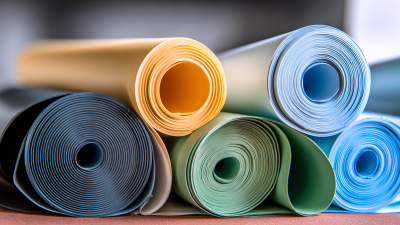
Choosing between rigid and flexible PVC starts with the job’s physical demands. Rigid PVC holds its shape under pressure and suits pipes, panels, housings, and protective covers. Flexible PVC bends around corners and works well for tubing, seals, cable jackets, and soft barriers. Feel the difference. Rigid PVC resembles a firm board, while flexible PVC may fold without cracking.
Check temperature, chemical exposure, impact, and movement before selecting a grade. A rigid pipe may fail when repeated bending creates stress at a joint. Flexible PVC can sag, stretch, or lose shape under heat or constant load. Review technical data for operating temperature, hardness, tensile strength, and chemical resistance. Compare those figures with real conditions, not ideal laboratory assumptions. Sunlight, cleaning chemicals, and workshop heat can change performance.
Installation details matter too. Measure bend radius, wall thickness, connection method, and available space. For flexible tubing, test a sample through its tightest bend while pressurized. For rigid parts, inspect cut edges and support spacing after assembly. I have seen suitable specifications reveal weak connections under vibration. That result deserves reflection. A small trial installation can expose problems that a datasheet cannot show. Selection is not always clean.
Rigid PVC typically provides higher tensile strength and dimensional stability, making it suitable for pipes, profiles, sheets, and fittings. Flexible PVC contains plasticizers, giving it greater flexibility for cables, tubing, seals, and soft protective products.
Typical reference ranges: rigid PVC density is approximately 1.35–1.45 g/cm³ with tensile strength around 40–55 MPa. Flexible PVC commonly has a density of about 1.20–1.40 g/cm³ and tensile strength around 10–25 MPa. Actual values vary with formulation, plasticizer content, additives, temperature, and processing conditions.
Comparing PVC grades starts with the application, not the lowest price. Rigid PVC suits pipes, profiles, and panels requiring shape retention. Flexible PVC bends more easily because plasticizers reduce stiffness. Chlorinated PVC handles higher temperatures, but processing conditions must match the grade. Check tensile strength, impact resistance, heat stability, and chemical compatibility in the technical data. A smooth pipe may look suitable, yet fail after repeated temperature changes.
Additives can change performance dramatically. Heat stabilizers protect PVC during processing. Impact modifiers improve resistance to drops and vibration. Lubricants support smoother production, while pigments influence appearance and weathering. Fillers may reduce cost, but excessive loading can weaken toughness. I once focused too heavily on hardness and overlooked low-temperature impact. That was a useful mistake. Real testing matters more than a perfect datasheet.
Tips: Compare grades under identical test conditions. Ask for batch data and processing guidance. Test finished parts, not only raw pellets. Check long-term exposure to sunlight, moisture, chemicals, and pressure. Keep a small sample after production for later inspection. This simple habit can reveal discoloration, cracking, or unexpected shrinkage.
Choosing the right polyvinyl chloride PVC requires more than checking color, weight, or price. Quality begins with traceable material information. Ask for the resin grade, additive details, production date, and test data. A reliable supplier should explain tensile strength, impact resistance, hardness, and temperature limits clearly. Vague answers deserve caution.
Inspect a sample under bright light. The surface should look even, without bubbles, cracks, oily marks, or unusual discoloration. Cut the edge and check for consistent structure.
I once accepted a smooth-looking PVC sheet that warped after moderate heating. That mistake taught me to test the actual application, not just the appearance.
Safety depends on the intended use. Confirm that the formulation suits contact conditions, ventilation needs, and workplace handling requirements. Review the safety data sheet and relevant compliance documents. Do not assume every PVC product is suitable for food contact, drinking water, medical use, or indoor installation. The difference may come from plasticizers, stabilizers, pigments, or residual processing chemicals.
Compatibility needs practical testing. Expose a small sample to the working temperature, pressure, moisture, and nearby chemicals. Check for swelling, softening, cracking, color change, or odor. Allow enough time. Quick checks can mislead. PVC may perform well during the first hour and fail after repeated exposure. Record the results, including what went wrong, because an imperfect test often reveals the most useful warning.