
No Job is Too Big or Too Small!
How to Choose the Right Wrapper Film for Global Sourcing?
Choosing the right Wrapper Film can determine whether a global shipment arrives crisp, secure, and commercially presentable. Film selection is not merely a price comparison. It involves barrier performance, sealing temperature, puncture resistance, print quality, machinery compatibility, and regional recycling expectations. A film that performs well on a dry warehouse line may wrinkle around chilled products or split during humid ocean transport.
Industry data shows why this decision deserves technical attention. Smithers’ global flexible packaging research identifies continued growth in demand for lightweight, high-performance packaging, driven by food protection and material reduction. The Flexible Packaging Association also reports that flexible packaging remains valuable because it uses relatively low material weight while supporting product preservation. However, “lightweight” does not automatically mean sustainable. The World Packaging Organisation and EU packaging policy discussions increasingly emphasize recyclability, responsible material use, and credible environmental claims.
Practical experience matters. Request film samples, test seal strength, measure coefficient of friction, and simulate pallet movement before approving a supplier. Check whether the supplier can provide consistent thickness, migration documentation, batch traceability, and independent test results. Ask for evidence, not promises.
Small details matter.
A 15-micron variation can affect sealing and yield. A glossy surface can hide poor ink adhesion. A recycled-content claim may require careful verification. Global sourcing also introduces currency, lead-time, port, and quality-control risks. No single Wrapper Film suits every product or market. The best choice balances protection, production efficiency, verified compliance, and total delivered cost, while leaving room to reconsider assumptions after real-world testing.
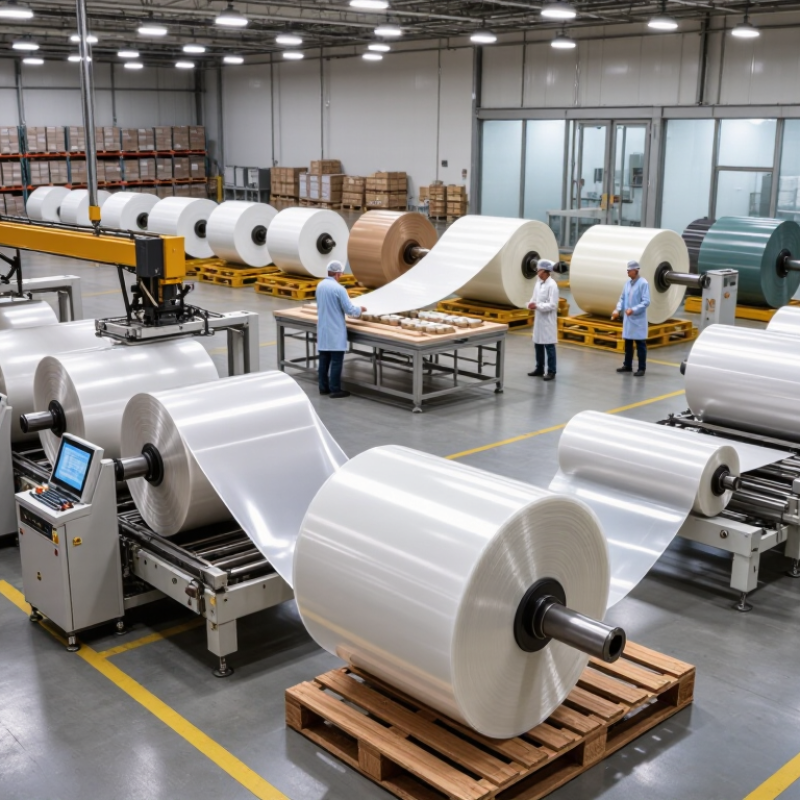
Define Your Packaging Needs and Sourcing Objectives
How to Choose the Right Wrapper Film for Global Sourcing?
Define Your Packaging Needs and Sourcing Objectives
A reliable film decision starts with the product, not the supplier’s catalog. Record product weight, shape, moisture sensitivity, shelf-life target, and distribution conditions. A frozen item may need puncture resistance, while bakery goods often require controlled oxygen transmission. Small details matter.
Specify the packaging machine before requesting quotations. Document sealing temperature, line speed, film width, roll diameter, and acceptable thickness tolerance. Ask for measurable data, including tensile strength, puncture resistance, seal strength, oxygen transmission rate, and water vapor transmission rate. A lower price means little if the film causes wrinkles, seal failures, or frequent line stoppages.
Your sourcing objective should include more than unit cost. Calculate landed cost using material price, freight, duties, testing, waste, and inventory financing. The OECD’s Global Plastics Outlook reports that packaging represented about 40% of global plastic waste in 2019. This makes recyclability, downgauging potential, and verified material content practical sourcing considerations, not decorative claims.
Set a supplier scorecard with quality consistency, production capacity, lead time, technical support, and documentation. Require representative samples and trial them on the actual machine. Smithers’ flexible packaging market research identifies continued growth in flexible formats, increasing pressure for material efficiency and sustainability. Still, assumptions can fail. A thinner film may reduce material use but increase breakage during transport. Recheck the whole system before approving a global specification.
How to Choose the Right Wrapper Film for Global Sourcing? - Define Your Packaging Needs and Sourcing Objectives
| Wrapper Film Type | Typical Structure | Common Thickness | Key Performance | Best-Fit Applications | Typical Sourcing Objective | Main Trade-Off |
|---|---|---|---|---|---|---|
| LLDPE Stretch Film | Linear low-density polyethylene | 12–35 μm | High stretchability, puncture resistance, and load retention | Pallet stabilization, logistics wrapping, warehouse protection | Reduce material consumption and transport damage | Limited heat-sealability and lower clarity than some shrink films |
| LDPE Shrink Film | Low-density polyethylene | 30–150 μm | Good toughness, flexibility, and seal strength | Bundling, industrial products, oversized or irregular loads | Prioritize durability and protection during export handling | Requires heat for shrinking and may use more material |
| POF Shrink Film | Polyolefin multilayer film | 10–25 μm | High clarity, balanced shrink, and strong seals | Retail multipacks, printed cartons, consumer goods, food packages | Improve shelf presentation while maintaining efficient film usage | Usually costs more than basic polyethylene film |
| PVC Shrink Film | Polyvinyl chloride | 20–60 μm | High clarity, good shrink response, and easy processing | Small retail packs and non-food promotional packaging | Seek strong visual appeal and compatibility with existing equipment | Recycling and regulatory acceptance vary by market |
| BOPP Wrapping Film | Biaxially oriented polypropylene | 15–40 μm | High stiffness, clarity, gloss, and printability | Overwraps, bakery products, labels, and printed retail packs | Enhance branding, machinability, and shelf visibility | Lower puncture resistance than thicker polyethylene films |
| Metallocene PE Film | Metallocene-catalyzed polyethylene | 12–30 μm | High puncture strength, consistent sealing, and downgauging potential | Heavy loads, automated wrapping, and demanding distribution routes | Lower total packaging weight without sacrificing protection | Higher resin cost requires performance-based cost analysis |
| Recycled-Content PE Film | PE film containing post-consumer or post-industrial recycled resin | 20–80 μm | Reduced virgin-plastic demand with variable mechanical performance | Secondary wrapping, transport film, and sustainability-led packaging programs | Meet recycled-content targets and reduce dependence on virgin resin | Color, odor, consistency, and certification must be verified |
Global Sourcing Evaluation Matrix
| Sourcing Dimension | Recommended Requirement to Define | Practical Acceptance Criteria | Why It Matters in Global Procurement |
|---|---|---|---|
| Film Dimensions | Width, thickness, roll length, core size, and winding direction | Tolerance limits documented in the purchase specification | Prevents equipment incompatibility and production stoppages |
| Mechanical Performance | Tensile strength, elongation, tear resistance, puncture resistance, and holding force | Laboratory test values matched to the product and distribution route | Links film selection directly to damage prevention and material efficiency |
| Machine Compatibility | Manual, semi-automatic, or automatic wrapping; sealing and shrinking temperature range | Successful trial on the target machine at the required line speed | Reduces commissioning risk across different production locations |
| Regulatory Compliance | Food-contact status where applicable, chemical declarations, labeling, and import documentation | Current compliance documents and traceable batch records | Requirements differ by destination market and end use |
| Sustainability Profile | Recyclability, recycled content, downgauging potential, and packaging weight | Verified material composition and documented recycled-content percentage | Supports environmental targets without relying only on marketing claims |
| Commercial Terms | Minimum order quantity, payment terms, tooling or cylinder charges, and price basis | Total landed cost calculated per kilogram, roll, or packed unit | A lower unit price may be offset by freight, duty, waste, or inventory costs |
| Supply Continuity | Production capacity, standard lead time, safety stock, and backup sourcing plan | Documented delivery performance and an approved contingency option | Protects global operations from port delays, resin shortages, and demand spikes |
Note: Performance and thickness ranges are indicative industry ranges. Final specifications should be confirmed through application testing, regulatory review, and a landed-cost analysis for the destination market.