Design for injection molding is a critical aspect of modern manufacturing. It ensures that parts are produced efficiently and within budget. John Smith, an industry expert at Molding Innovations, emphasizes, “Good design transforms a part from concept to reality.” His insights highlight the importance of integrating design with manufacturing processes.
Injection molding is not just about creating parts; it involves anticipating potential issues. Design for injection molding requires careful consideration of geometry, material, and production limits. Small mistakes can lead to costly defects. An experienced designer understands the balance between creativity and practicality. This approach requires both skill and foresight.
Emphasizing design for injection molding allows for high-quality production. However, the journey can be complex. Designers must constantly refine their strategies. This iterative process sheds light on the need for continuous improvement. Mistakes can serve as valuable learning opportunities. Balancing aesthetics with functionality is essential for success.

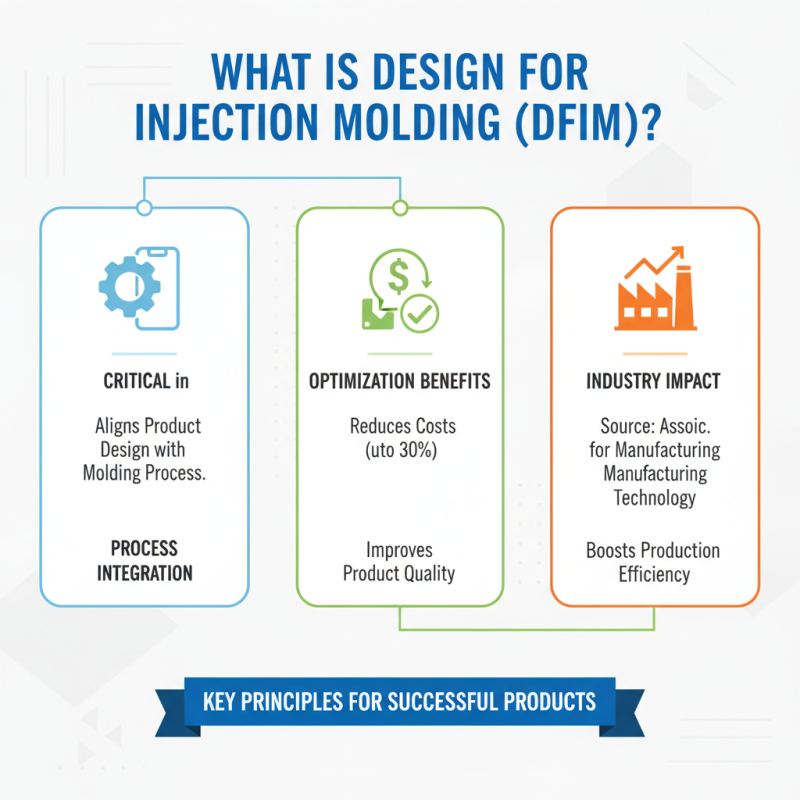
Design for Injection Molding (DfIM) is critical in the manufacturing process. This approach ensures that products are designed with the injection molding process in mind. Optimizing the design can significantly reduce costs and improve product quality. According to a report from the Association for Manufacturing Technology, effective DfIM practices can reduce production costs by up to 30%.
When considering DfIM, it’s crucial to focus on material selection and part geometry. Thin walls allow for quicker cooling times, which can enhance efficiency. However, designers must also be mindful of potential warping. Always conduct simulations to predict part behavior during molding.
Tips: Always aim for uniform wall thickness. This minimizes stress and risk during cooling. Also, consider using draft angles for easier part removal from molds.
Another essential factor is the balance between aesthetics and functionality. While a sleek design may look appealing, it could introduce production challenges. Balancing these elements isn’t always straightforward. Collaborating with engineers early in the design phase can help identify potential pitfalls.
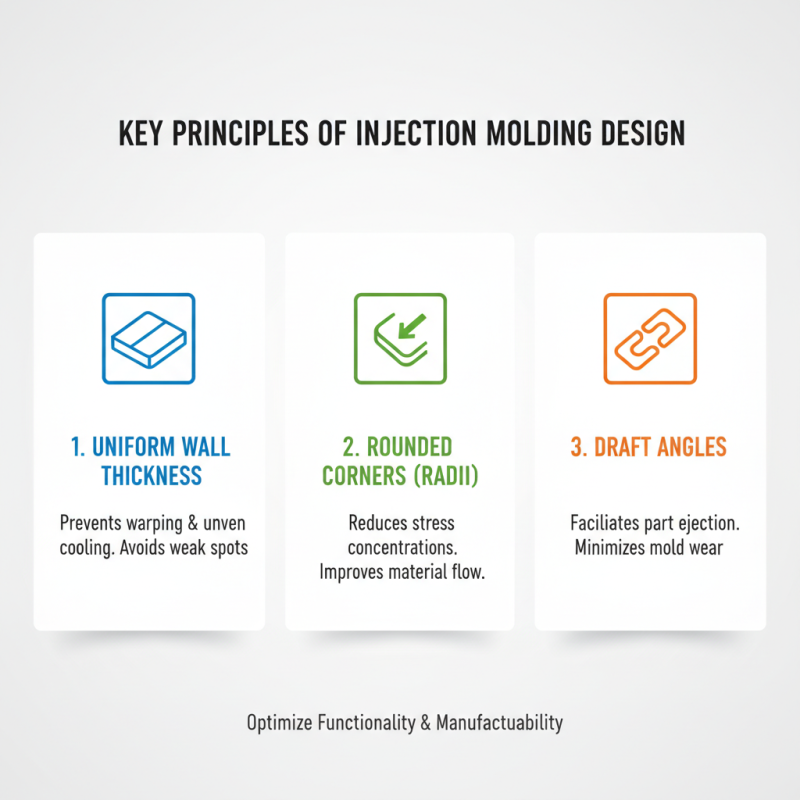
Design for injection molding is crucial for creating effective and efficient products. This design process involves key principles that can optimize the functionality and manufacturability of parts. One primary principle is wall thickness. Consistent wall thickness helps prevent issues like warping and uneven cooling. Thin sections can lead to weaknesses, while overly thick areas might trap material and hinder flow.
Another vital aspect is the placement of cores and cavities. These features directly influence how material fills the mold. Optimal placement minimizes air traps and enhances flow, critical for achieving high-quality parts. Additionally, incorporating draft angles in the design is essential. Draft angles enable easier ejection of parts from the mold, reducing potential damage and improving production speed.
Material selection is another important element. Choosing the right polymer affects not only the final product's strength but also how it behaves during the injection process. Some materials might require more careful handling due to their specific flow characteristics. Designers need to be aware of these variances, as oversights can result in poor-quality outputs. Balancing these principles effectively requires both creativity and technical understanding.
Design for injection molding is critical in manufacturing. It emphasizes the creation of parts that fit perfectly into the injection molding process. Effective design ensures that products are produced with precision and efficiency, minimizing waste. One major benefit is cost savings. By optimizing design, manufacturers can reduce material usage and decrease cycle times.
Tips: Consider material properties early in the design phase. This helps anticipate how the materials will behave during molding. Rethinking shapes can lead to easier mold creation. For example, avoid complex geometries if possible.
Another advantage is improved part quality. A well-designed mold results in fewer defects. This leads to stronger and more reliable products. It also enhances brand reputation. However, it's essential to collaborate with mold makers. Communication can highlight potential pitfalls in your design. Sometimes, what seems ideal on paper can pose manufacturing challenges.
Tips: Prototype designs before full-scale production. Observing real-world performance reveals flaws you might have missed. Feedback is invaluable for refining designs. Remember, no design is perfect from the start. Regular iterations lead to better outcomes.
Injection molding is a widely used manufacturing process, but it faces several design challenges. One significant issue is the design of part geometry. Complex shapes can lead to difficulties in material flow and increased cycles. A report by the Plastic Industry Association indicates that over 30% of injection molding defects stem from inadequate design.
Another challenge is the precise management of shrinkage. Different materials may shrink at varied rates during cooling. This can result in dimension inconsistencies. Recent data reveals that undetected shrinkage can impact product quality in around 20% of molding operations. Proper design practices should include consideration for thermal expansion and contraction.
Draft angles are often overlooked in the design phase. Insufficient draft can create difficulties in part ejection, increasing rejection rates. Studies show that implementing a draft angle can reduce cycle times by as much as 15%. Without these considerations, manufacturers face increased costs and delays. Each of these factors highlights the importance of thoughtful design in injection molding, ensuring efficiency and product reliability.
| Aspect | Description | Common Challenges | Solutions |
|---|---|---|---|
| Material Selection | Choosing the right material for the injection molded part based on strength, flexibility, and cost. | Material defects and cost overruns. | Conduct thorough material testing and feasibility studies. |
| Part Design | Designing parts that can be efficiently manufactured and have suitable tolerances. | Difficulties in producing complex geometries or achieving high tolerances. | Utilize CAD software and simulations to optimize design before production. |
| Mold Design | Creating molds that efficiently fill with plastic and allow easy ejection. | Issues with mold release and surface finish. | Incorporate draft angles and surface treatment for better outcomes. |
| Process Optimization | Setting optimal temperatures, pressures, and speeds for injection molding. | Inconsistent part quality and cycle times. | Implement real-time monitoring and adjustments during production. |
| Cost Efficiency | Balancing the costs of materials, tooling, and production. | Unexpected increases in production costs. | Perform cost analysis during the design phase to avoid pitfalls. |
Design for Injection Molding significantly impacts production efficiency and cost. Effective design streamlines the manufacturing process, reducing waste and time. When parts are easy to mold, they decrease cycle times. Shorter cycles mean higher output rates. This efficiency translates directly into lower production costs.
On the other hand, poor design can lead to complications. Complex geometries may require more intricate molds, increasing initial costs. Additionally, defects can arise from inadequate design, leading to expensive rework. Engineers must reflect on design choices, considering long-term implications on costs and efficiency.
Design choices also affect material usage. Optimizing wall thickness can minimize waste and reduce expenses. However, designers sometimes overlook material characteristics, leading to failures later on. A thoughtful approach to design ensures balanced trade-offs between performance and cost. Continuous evaluation of design strategies is essential for success in injection molding.