
No Job is Too Big or Too Small!

China Top 10 Balloon Blower Suppliers for Buyers?

Choosing a Balloon Blower supplier is about more than comparing prices. Buyers need equipment that performs consistently, fits the intended display, and arrives with clear operating guidance. A blower moving air through a small indoor decoration may face different demands from one running an outdoor inflatable for hours. Details matter: airflow ratings, motor noise, housing quality, cord length, and access to replacement parts.

This guide examines ten China-based suppliers through practical buyer questions, not an unexplained ranking. Check product specifications against your actual setup. Ask how continuous operation is rated, what testing documents are available, and how the supplier handles service and spare parts. A polished catalog is useful, but it cannot replace a sample run. Listen to the motor. Check the airflow. Small imperfections can reveal what a brochure leaves out.

A note on the quotation: Lin Wei is a fictional composite specialist, not a verified industry source. His buying principle is: “A dependable Balloon Blower is one whose airflow, operating limits, and support are clear before the order is placed.” That is a sensible standard, though it does not guarantee a perfect purchase. Supplier claims still deserve careful verification.
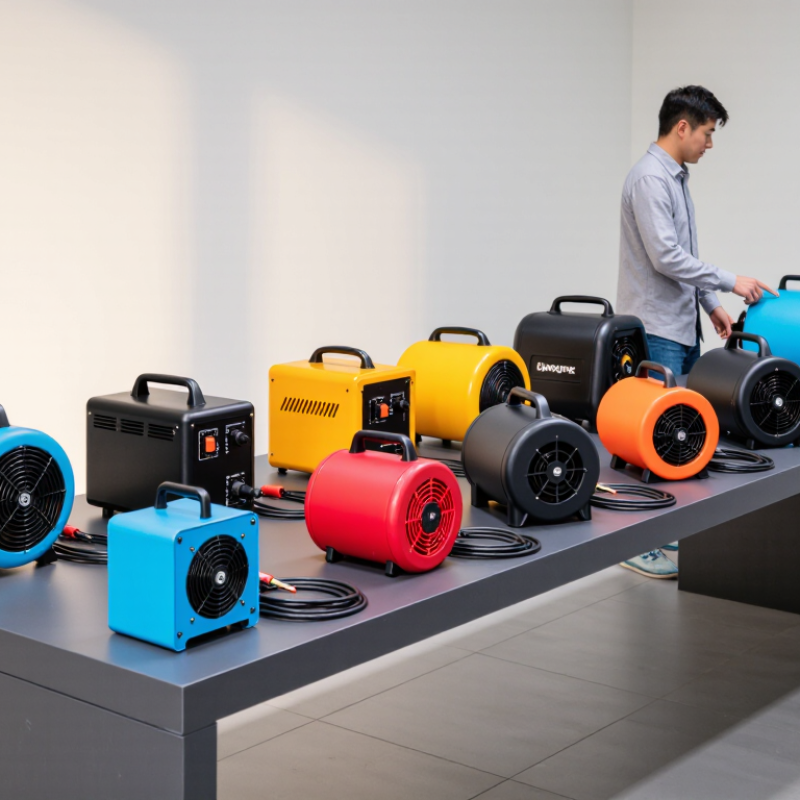
China Top 10 Balloon Blower Suppliers for Buyers?

What Balloon Blowers Are and Which Buyers Use Them

A balloon blower is a compact machine that inflates balloons with a controlled flow of air. Many models use a foot pedal or hand switch, leaving both hands free to tie balloons. For busy decorating teams, that can make repeated setup faster and less tiring. It is not a helium tank; the machine fills balloons with ordinary air.

Small event planners often use balloon blowers for arches, garlands, and table displays. Party rental companies may need durable equipment for frequent jobs.

Retailers and balloon decorators can benefit when they prepare many pieces at once. A school or family hosting one celebration may not need a machine at all. A simple hand pump could be enough.

Buyers should consider balloon sizes, daily workload, noise, and access to replacement parts. A blower that handles standard latex balloons may not suit every specialty shape. Check whether airflow is adjustable, and test the unit with the balloons you actually use. That detail is easy to overlook. I would also ask how long the machine can run before cooling down; supplier descriptions do not always explain real working conditions. A fast machine is useful, but steady, predictable inflation matters more when a display needs matching sizes.

How to Evaluate Balloon Blower Suppliers in China

Choosing among China’s top balloon blower suppliers requires more than comparing prices or product photos. Start with the machine’s intended use: a small party shop needs different airflow and operating time from a busy event warehouse. Ask for rated voltage, airflow, pressure, noise level, and recommended duty cycle in writing. Specific answers matter.

Request a sample or a live video test. Watch how quickly the blower inflates a standard balloon, whether airflow stays steady, and how warm the housing becomes after repeated use. Ask how motors and switches are checked before shipment. A clear inspection record is more useful than a broad quality promise. Check that electrical documents match the exact model and destination requirements. Details can be missed.

Compare quotations on the same specifications, including packaging, spare parts, lead time, and warranty terms. Ask who handles troubleshooting and how quickly replacement parts can be supplied. Notice whether replies address your actual questions; vague answers may signal weak technical support. Still, communication is not proof of factory performance. I would not rely on a polished sample alone: production units can vary, and even a careful checklist cannot remove every risk. Keep written specifications and test results for later comparison.

How to evaluate balloon blower suppliers in China

This buyer-designed checklist groups 10 verification checks across five evaluation areas. The bars show the number of checks in each area—not supplier ratings or market statistics. Verify product performance, quality-control records, applicable safety documents, production capacity, lead times, warranty terms, spare-parts support, and contract conditions.

China’s Top 10 Balloon Blower Suppliers at a Glance

China’s balloon blower market includes suppliers serving party shops, event teams, rental companies, and distributors. A useful at-a-glance comparison should separate compact inflators from equipment designed for repeated, high-volume use. Buyers can compare motor power, supported balloon sizes, inflation speed, noise levels, and included adapters. These details matter more than a polished product photo.

Supplier profiles also differ in customization, order quantities, sample access, and export support. Ask for clear product specifications, packaging dimensions, warranty terms, and an estimate of production time. If possible, test a sample with several balloon sizes and record how quickly it fills them. Small details matter. A loose nozzle or short power cord can slow a busy setup.

A top-ten list is most useful as a starting point, not a guaranteed ranking. Supplier capabilities can change, and public catalogs may not show current stock or production limits. Request recent inspection records or product test information, then confirm key details in writing. I would not choose on price alone; still, comparing quotations can reveal what is included and where compromises may sit. That part is easy to overlook. Buyers should match each supplier’s equipment and service level to their actual workload.

China’s Top 10 Balloon Blower Suppliers at a Glance

An anonymized buyer-screening overview of common supplier and product profiles. The profiles are not named companies or a verified ranking; specifications are indicative and should be confirmed with each seller.

Profile Supplier Focus Typical Product Configuration Common Power and Supply Options Best Suited For Key Checks Before Ordering
Supplier Profile 1 Basic electric balloon pumps Portable, two-nozzle inflator for standard latex balloons; manual start/stop operation is common. Models commonly offer market-specific voltage versions, such as 110–120 V or 220–240 V; confirm the exact rating on the nameplate. Party shops, home use, and small event setups Plug type, rated voltage, continuous-use limits, noise level, and included accessories
Supplier Profile 2 Foot-operated inflators Compact electric pump with a foot switch, allowing hands-free control during inflation. Voltage and frequency vary by destination market; confirm compatibility before purchase. Decorators who inflate balloons repeatedly at a worktable Switch durability, nozzle fit, airflow control, and replacement-part availability
Supplier Profile 3 High-throughput electric inflators Higher-airflow pump designed for faster inflation and frequent use; some models include thermal protection. Electrical input and duty cycle are model-specific and should be checked against the product label and manual. Event crews and busy decoration businesses Verified airflow, duty cycle, overheat protection, operating noise, and warranty terms
Supplier Profile 4 Adjustable-flow balloon pumps Electric inflator with a control feature for adjusting airflow or inflation output. Available electrical configurations depend on the selected model and intended sales market. Users handling different balloon sizes or needing more consistent inflation How adjustment works, repeatability, supported balloon sizes, and test results
Supplier Profile 5 Latex and foil balloon inflators Models may include separate inflation modes or adapters for latex balloons and self-sealing foil balloons. Confirm the voltage version and whether the supplied adapters match the balloon valves being used. Retailers and decorators working with mixed balloon materials Foil-balloon compatibility, adapter dimensions, valve fit, and operating instructions
Supplier Profile 6 Portable and lightweight pumps Compact electric unit designed for easy transport; product size and weight vary by model. Some models are mains-powered; battery operation is available only on selected products. On-site decorators and mobile event teams Actual weight, battery capacity where applicable, charging method, and runtime
Supplier Profile 7 Manual balloon pumps Hand-operated or foot-operated pump that does not require an electrical supply. No electrical input required. Small jobs, outdoor use, and backup inflation Pump action, nozzle size, construction quality, and suitability for the intended balloon sizes
Supplier Profile 8 Inflators with multiple nozzles or adapters Electric pump supplied with interchangeable tips or nozzle accessories for different inflation needs. Confirm the precise electrical rating for the destination country; accessory sets differ by model. Buyers who need flexibility across balloon types Included accessory list, spare-tip availability, nozzle security, and compatibility claims
Supplier Profile 9 Private-label and OEM-capable suppliers Standard inflator models may be offered with buyer-specific packaging, labeling, or color options. Electrical configuration, plug, and labeling should be agreed for the destination market. Importers, distributors, and event-supply retailers Minimum order quantity, sample approval, packaging proof, lead time, and compliance documents
Supplier Profile 10 Commercial event-equipment suppliers Balloon pumps sold as part of a broader event-equipment range; product selection and service levels vary. Check the exact model’s voltage, frequency, plug, and recommended operating cycle. Buyers sourcing several event products from one supplier After-sales support, spare parts, product traceability, shipment terms, and written warranty coverage

Buyer note: Request a current specification sheet, product-label photos, a sample unit, and destination-market compliance documentation. Do not rely on a listing title alone to confirm voltage, airflow, duty cycle, or balloon compatibility.

Comparing Product Types, Customization, and Certifications

When comparing China’s balloon blower suppliers, separate hand-held inflators from floor-standing and dual-nozzle models. A compact unit suits small displays; a dual-nozzle blower can speed up event setup. Ask for airflow rate, duty cycle, plug options, and noise measurements—not just motor wattage. A high wattage figure alone does not prove faster inflation. Test a sample with the balloons you actually use.

Customization can cover housing color, logo placement, cable length, packaging, and plug type. Request a written specification and a pre-shipment sample. Small details matter. Check whether the supplier can keep those details consistent across repeat orders.

Grand View Research valued the global air compressor market at USD 19.3 billion in 2023, but that broad figure is not a balloon-inflator market estimate. It does show why component capacity and performance data deserve scrutiny. For certifications, request the specific test reports and model numbers; verify that they match the blower being quoted. Ask about electrical safety, materials, and quality-management documentation for your destination market. Certificates are not interchangeable. One overlooked issue: custom changes may affect the validity of existing test reports, so confirm this before approving production.

How Buyers Can Verify Suppliers and Plan Procurement

Buyers comparing balloon blower suppliers should verify the machine, not just the catalog. Request a dated specification sheet listing airflow, operating pressure, voltage, duty cycle, noise level, and intended use. These details help match equipment to event volume and available power. Small mismatch, big headache.

Ask the supplier for a live demonstration using the configuration you plan to order. Check startup, airflow consistency, heat, and unusual vibration during a sustained run. Request inspection records and contact details for recent business customers, with permission to follow up. A polished video helps, but it is not proof by itself. Where possible, arrange an independent pre-shipment inspection.

Plan procurement around a written quotation that identifies model specifications, accessories, packaging, lead time, warranty coverage, and spare-part availability. Confirm which party handles freight and what happens if units arrive damaged or fail inspection. Order a sample when practical, then record the results against your requirements. Leave time for production delays and incoming checks. I would not rely on one successful test alone; batch variation can still surprise you. Keep every agreed detail in writing before making a deposit.