
No Job is Too Big or Too Small!

Top 10 Types of Carbon Steel Pipe for Sale?

Choosing the right carbon steel pipe begins with understanding service conditions, not just comparing prices. A carbon steel pipe for sale may look suitable online, yet its wall thickness, grade, outside diameter, and manufacturing method can change its performance significantly. In a refinery, a pipe may face heat and pressure. In a water line, corrosion protection and flow capacity may matter more.

George Krauss, a respected steel metallurgist and author, observed, “The properties of steels depend on their microstructure.” This principle remains important when evaluating seamless, welded, galvanized, spiral, and other carbon steel pipe types. Their differences are not merely visual. They affect strength, weldability, dimensional accuracy, installation time, and expected service life.

Details matter.

This guide presents ten common types of carbon steel pipe for sale and explains where each option may fit. It considers construction, industrial processing, oil and gas transportation, structural support, and general fluid service. Relevant specifications, such as ASTM, API, and ASME requirements, should be checked against the actual project design. Standards can guide a decision, but they do not replace engineering judgment.

There is no perfect ranking for every buyer. A low-cost pipe may create higher maintenance demands later. A stronger grade may be unnecessary for a low-pressure application. Even experienced purchasers can overlook temperature changes, internal corrosion, or joining requirements. The goal is not to select the most impressive pipe. It is to select a verified product that matches the operating environment, budget, and safety expectations.
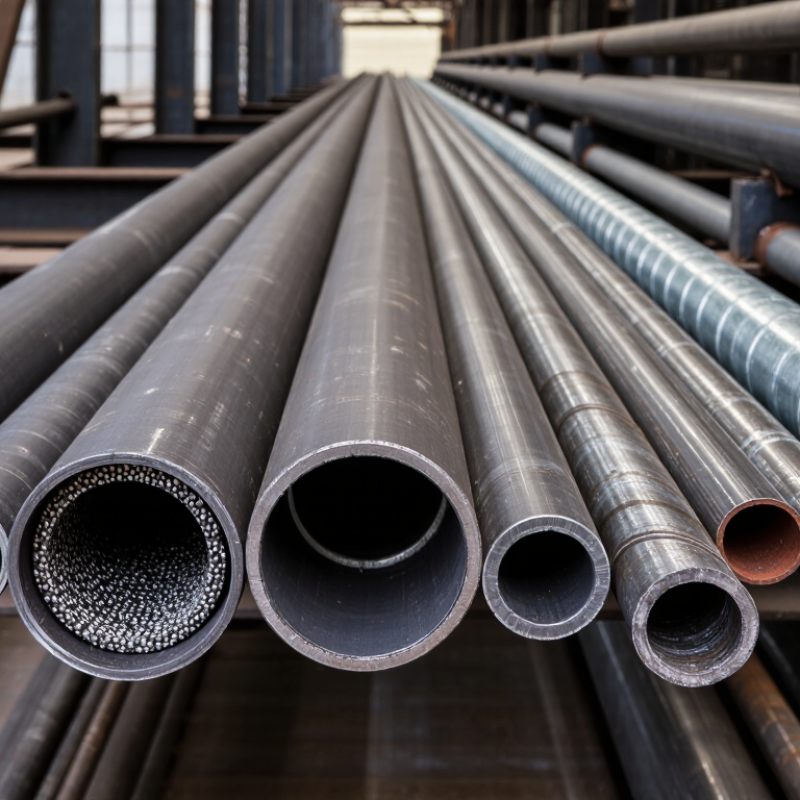
Top 10 Types of Carbon Steel Pipe for Sale?

Carbon Steel Pipe Basics and Main Classification Criteria

Top 10 Types of Carbon Steel Pipe for Sale

Carbon steel pipe contains iron and carbon, with small amounts of other elements. Its strength, price, and weldability suit many industrial applications. Classification usually depends on manufacturing method, surface treatment, wall thickness, and service pressure. The ten common types include seamless, ERW, LSAW, SSAW, black steel, galvanized, line, boiler, structural, and pressure pipe. These categories can overlap. A seamless pipe may also serve pressure applications.

Seamless pipe is formed without a welded seam and handles demanding pressure well. ERW pipe uses electrical resistance welding and often offers efficient production for general service. LSAW and SSAW pipes suit larger diameters, although their weld quality requires careful inspection. Black steel pipe has an untreated surface, while galvanized pipe includes a zinc coating for improved corrosion resistance. Wall thickness matters. A thin pipe may reduce cost but fail under unexpected loads. I have seen buyers focus on diameter and overlook temperature, fluid properties, and connection design. That decision can create expensive problems.

Tips: Check the required outside diameter, schedule, material grade, length, and test certificates before purchasing. Confirm whether the pipe needs hydrostatic testing, coating, or heat treatment. For outdoor use, plan corrosion protection from the beginning. Ask for traceability records and inspect markings on the pipe surface. Standards such as ASTM, ASME, and API can guide selection, but the project specification should control. When conditions are unclear, consult a qualified engineer rather than choosing only by price.

Ten Common Types of Carbon Steel Pipe for Sale

Ten Common Types of Carbon Steel Pipe for Sale

Carbon steel pipe is sold in several forms, and each suits a different service. Seamless pipe handles pressure well because it has no welded seam. ERW pipe is economical and widely used for water, air, and structural systems. EFW pipe supports larger sizes and demanding fabrication work. LSAW pipe uses longitudinal welding, while SSAW pipe uses spiral welding for large diameters. These choices affect strength, inspection needs, and delivery time.

Black steel pipe has a plain dark surface and often serves gas, water, or framework applications. Galvanized carbon steel pipe has a zinc coating that improves resistance to rust. Boiler pipe is designed for heat and pressure, but its grade must match the operating temperature. Line pipe carries fluids over long distances and requires suitable mechanical and chemical properties. Structural pipe supports buildings, platforms, and industrial frames. The tenth type is schedule-based pipe, such as Schedule 40 or Schedule 80, which describes wall thickness rather than manufacturing method. This point is easy to miss.

Tips: Check the outside diameter, wall thickness, steel grade, length, and end finish before buying. Ask for mill test certificates and dimensional inspection records. Confirm the required standard with a qualified engineer. A low price can hide poor tolerances or unsuitable chemistry. I have seen buyers focus on diameter alone, then discover the pipe cannot fit their welding procedure. Recheck the details.

Key Applications of Each Carbon Steel Pipe Type

Top 10 Types of Carbon Steel Pipe for Sale: Key Applications of Each Type

Carbon steel pipe selection starts with service conditions, not appearance. Seamless pipe suits high-pressure hydraulic, chemical, and thermal systems. ERW pipe supports water distribution, low-pressure gas, and general fabrication. LSAW pipe handles large-diameter transmission lines and offshore structures. SSAW pipe is common in water mains, piling, and lower-pressure pipeline projects. The categories overlap more than sales pages suggest.

Black steel pipe is widely used for fire protection, compressed air, and industrial frames. Galvanized pipe resists atmospheric corrosion in fencing, drainage, and outdoor supports. Boiler and heat-exchanger tubes serve high-temperature steam systems. Their wall thickness and steel grade demand careful verification. The International Energy Agency’s Gas 2024 report expects global gas demand to grow by more than 2.5% in 2024, supporting continued investment in transmission infrastructure.

Line pipe carries oil, gas, and treated water over long distances. Casing and tubing support well construction and production, where collapse resistance matters. Structural hollow sections serve columns, trusses, handrails, and warehouse frames. World Steel Association data records about 1.89 billion tonnes of crude steel production in 2023, showing the scale behind these products. Still, production volume does not guarantee suitability. Welding method, corrosion allowance, impact testing, and certification must match the project. A cheaper pipe can become expensive after failures, recoating, or replacement.

How to Compare Carbon Steel Pipe Specifications and Standards

Top 10 Types of Carbon Steel Pipe for Sale

Comparing carbon steel pipe requires more than checking the price per meter. Start with outside diameter, wall thickness, length, and weight. A 2-inch Schedule 40 pipe differs greatly from a Schedule 80 pipe, even when both share the same nominal size. Review whether the pipe is seamless, electric-resistance welded, spiral-welded, black, or galvanized. Each type suits different pressure, temperature, and corrosion conditions. Common specifications include ASTM A53 for general service, ASTM A106 for high-temperature applications, and API 5L for pipeline use. However, the newest edition and project scope must be verified.

Tips: Match the standard to the service, not just the catalog title. Check grade, yield strength, tensile strength, chemical limits, and hydrostatic test requirements. Ask for the mill test certificate and confirm heat numbers on the pipe markings. Inspect wall thickness with calibrated tools, especially near weld seams. Small differences matter.

In my experience, buyers often compare nominal size while overlooking actual tolerances. That mistake can affect threading, welding, and installation clearance. ASME B36.10M helps compare dimensions, while EN standards may use different designations and tolerance rules. Do not mix standards casually. A pipe may look acceptable but fail a required impact, coating, or inspection condition. I would also confirm end type, bevel angle, protective packaging, and delivery documents before purchase. Details are easy to miss.

Factors to Consider Before Buying Carbon Steel Pipe

Top 10 Types of Carbon Steel Pipe for Sale: Factors to Consider Before Buying

Carbon steel pipe types include seamless, welded, line, structural, boiler, pressure, galvanized, spiral, square, and rectangular pipe. Each type serves a different operating condition.

The global steel market produced about 1.9 billion tonnes in 2023, according to World Steel Association data. That scale creates many grades, sizes, and quality levels. Price alone cannot identify the right pipe.

Start with service conditions. Check the fluid, temperature, pressure, flow rate, and installation environment.

Seamless pipe may suit demanding pressure applications, while welded pipe can offer practical value for larger diameters. Confirm wall thickness with pressure calculations, not visual judgment.
ASTM and ASME standards help define dimensions, chemistry, testing, and tolerances. Request a material test certificate, heat number, and inspection records.

Traceability matters when failure could stop production.

Corrosion deserves careful attention. The AMPP IMPACT study estimated global corrosion costs at about 3.4% of global gross domestic product.

Coating, cathodic protection, drainage, and corrosion allowance can reduce future losses. Yet coating is not a universal answer. Internal moisture, soil chemistry, and weld quality still require review.

A common mistake is choosing a stronger grade without checking weldability. That decision may increase fabrication problems.

I would also compare delivery length, cutting waste, transport damage, and replacement access. No checklist is perfect. Recheck the actual site conditions before approving the purchase.