
No Job is Too Big or Too Small!

Top 10 Types of Graphite Iron for Global Buyers

For global buyers, Graphite Iron is more than a basic casting material. Its graphite shape, matrix structure, and alloy chemistry influence strength, machinability, vibration control, and service life. A pump housing, engine block, or industrial brake component may require a very different iron grade.

Professor Doru M. Stefanescu, a recognized authority in cast-iron metallurgy, has stated, “Cast iron is a family of materials, not a single material.” This principle matters when comparing the top 10 types of Graphite Iron. Gray iron offers strong damping and practical machinability. Ductile iron provides higher tensile strength and impact resistance. Compacted graphite iron can balance thermal performance with mechanical durability. Other categories, including malleable, white, alloyed, austempered, and vermicular irons, serve more specialized requirements.

The right choice begins with the application. Buyers should examine graphite morphology, hardness, tensile data, elongation, section size, and expected operating temperature. Manufacturing route also matters. Sand casting, shell molding, and precision casting can produce different surface conditions and dimensional results. Supplier experience is visible in inspection records, metallographic images, and traceable material certificates.

Details matter.

A low-cost grade may increase machining time or failure risk later. Some published data can look impressive, yet actual performance may vary between foundries. That is an uncomfortable limitation. Therefore, responsible sourcing requires sample testing, clear standards, and direct technical communication. This guide introduces ten important Graphite Iron types and explains where each may fit, while recognizing that no grade is perfect for every global application.
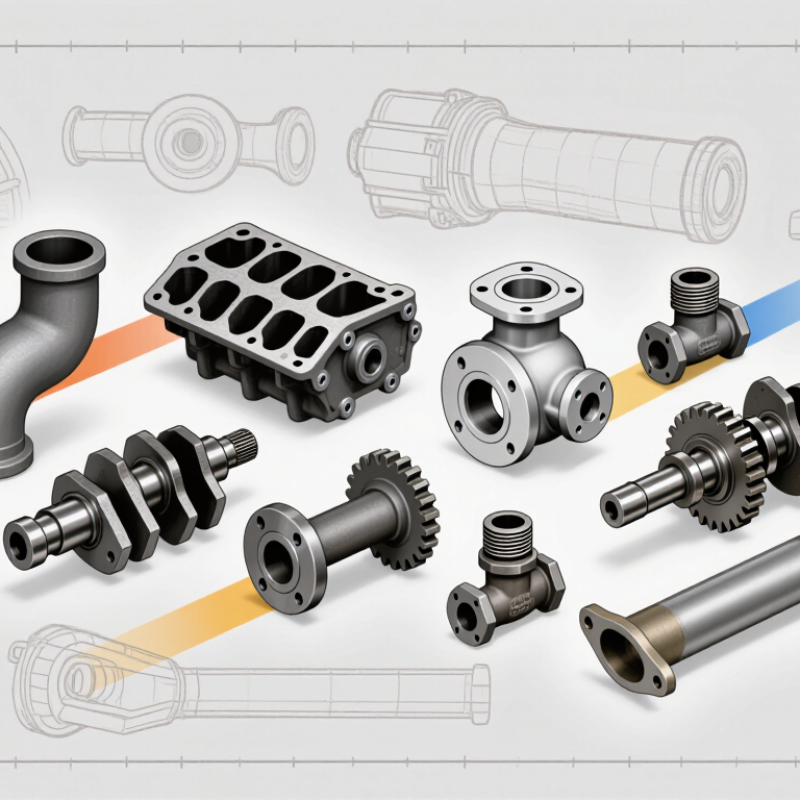
Top 10 Types of Graphite Iron for Global Buyers

Graphite Iron: Definition, Structure, and Core Classification

Graphite iron is a group of cast irons in which carbon appears as graphite within an iron-based matrix. Its performance depends on graphite shape, distribution, and the surrounding matrix. A polished section may show flakes, rounded nodules, or short worm-like particles. These details affect strength, vibration damping, machinability, and thermal behavior.

Gray iron contains flake graphite, which helps absorb vibration but can reduce tensile strength. Ductile iron contains rounded graphite nodules, giving it higher toughness and load-bearing capacity. Compacted graphite iron sits between these forms, with short, interconnected particles and balanced thermal and mechanical properties. Malleable iron uses heat treatment to create irregular graphite clusters, although its production route differs from standard graphite castings. Matrix classification also matters: ferritic grades are softer and more ductile, while pearlitic grades are harder and stronger.

For global buyers, grade names alone are not enough. Request chemical composition, graphite morphology, matrix structure, tensile data, hardness, and inspection records. A cylinder block may need stable thermal conductivity, while a pump housing may require pressure tightness and impact resistance. Standards vary between regions, so equivalent grades should be checked carefully. The label can mislead. Even experienced buyers sometimes compare grades without checking section thickness or heat-treatment history. That mistake is easy to make. Supplier experience, sample testing, and traceable production records provide stronger evidence than a catalog description.

The Ten Main Types of Graphite Iron for International Buyers

Top 10 Types of Graphite Iron for Global Buyers

The Ten Main Types of Graphite Iron for International Buyers

International buyers usually compare ten graphite-iron families: gray, ductile, compacted graphite, malleable, alloyed gray, alloyed ductile, austempered ductile, ferritic ductile, pearlitic ductile, and high-silicon ductile iron. Their graphite shape controls strength, vibration damping, machinability, and fracture behavior. Gray iron uses flake graphite for excellent damping. Ductile iron uses nodules for higher tensile performance. Compacted graphite iron sits between them, but its production window is narrow. Small chemistry changes matter.

ASTM A48/A48M classifies gray iron by tensile strength, while ASTM A536 covers ductile iron grades. ISO 1083 also specifies spheroidal graphite iron requirements for international purchasing. Buyers should request chemistry, nodularity, hardness, tensile results, and metallographic images. A polished cross-section can reveal defects that a clean casting surface hides. Ask for heat-lot traceability.

Material selection must match the component. Ferritic ductile iron suits lighter, machinable parts. Pearlitic grades support higher wear and strength. Austempered ductile iron can reduce weight, though heat-treatment control becomes critical. The USGS Mineral Commodity Summaries 2024 reported roughly 1.6 million metric tons of natural graphite production in 2023, showing why raw-material sourcing deserves attention. That figure concerns graphite supply, not cast-iron output. The distinction is easy to miss. Casting simulation, test coupons, and independent inspection improve reliability, but no grade removes design risk.

Top 10 Types of Graphite Iron for Global Buyers - The Ten Main Types of Graphite Iron for International Buyers
Graphite Iron Type Graphite Morphology Typical Matrix or Chemistry Typical Tensile Strength Typical Elongation Main Performance Characteristics Common Applications Common Standards
Gray Cast Iron Flake graphite, generally classified as A, B, C, D, or E types according to distribution and size Usually pearlitic, ferritic, or a mixed ferritic-pearlitic matrix 150–350 MPa Usually below 1% Excellent vibration damping, good machinability, high compressive strength, and good thermal conductivity; relatively low ductility and impact resistance Machine bases, brake discs, engine blocks, pump housings, flywheels, and general-purpose castings ASTM A48
EN 1561
ISO 185
Ferritic Ductile Iron Spheroidal or nodular graphite Predominantly ferritic matrix with low pearlite content 370–500 MPa 10–18% High ductility, good impact resistance, good machinability, and good resistance to thermal shock Pressure-containing parts, pipe fittings, agricultural components, brackets, and safety-related castings ASTM A536
EN 1563
ISO 1083
Ferritic-Pearlitic Ductile Iron Spheroidal or nodular graphite Mixed ferritic-pearlitic matrix, balanced for strength and ductility 500–700 MPa 3–10% Balanced tensile strength, fatigue resistance, machinability, and moderate impact toughness Automotive suspension parts, hubs, differential cases, steering components, and industrial machinery parts ASTM A536
EN 1563
ISO 1083
Pearlitic Ductile Iron Spheroidal or nodular graphite Predominantly pearlitic matrix, often with controlled carbide content 600–900 MPa 2–8% High strength, good wear resistance, improved fatigue performance, and higher hardness than ferritic grades Gears, crankshafts, camshafts, heavy-duty brackets, pressure components, and wear-resistant machine parts ASTM A536
EN 1563
ISO 1083
Compacted Graphite Iron Vermicular or compacted graphite with rounded, interconnected particles Ferritic, pearlitic, or mixed matrix 400–700 MPa Approximately 1–5% Higher strength and thermal fatigue resistance than gray iron, with better thermal conductivity and damping than ductile iron Diesel engine blocks, cylinder heads, exhaust manifolds, brake components, and high-temperature housings ASTM A842
ISO 16112
Malleable Cast Iron Temper carbon nodules formed by heat treatment of white iron Ferritic, pearlitic, or pearlitic-ferritic matrix 350–700 MPa 2–18% Good ductility, impact resistance, machinability, and suitability for relatively thin or complex castings Pipe fittings, brackets, agricultural hardware, electrical fittings, and mechanical connection components ASTM A47
EN 1562
ISO 5922
Austempered Ductile Iron Spheroidal graphite in an ausferritic matrix Ferrite and high-carbon austenite, produced by austempering heat treatment 800–1,600 MPa 1–10% High strength-to-weight ratio, excellent fatigue strength, good wear resistance, and useful impact toughness Gears, suspension components, sprockets, rollers, drive parts, and high-load structural castings ASTM A897
EN 1564
High-Silicon Ductile Iron Spheroidal graphite Ferritic or ferritic-pearlitic matrix with elevated silicon content, commonly above conventional ductile-iron levels 450–700 MPa 5–15% Improved oxidation resistance, dimensional stability, and high-temperature strength compared with standard ferritic ductile iron Exhaust-related components, hot-air housings, industrial furnace parts, and elevated-temperature machinery components EN 1563
ISO 1083
Application-specific specifications
Austenitic Ductile Iron Spheroidal graphite in an austenitic matrix Nickel-alloyed austenitic matrix, sometimes alloyed with chromium, copper, or molybdenum 450–800 MPa 2–15% Good corrosion resistance, stable properties at low and elevated temperatures, and useful resistance to thermal growth Marine components, chemical-processing equipment, pumps, valves, cryogenic parts, and high-temperature castings ASTM A439
EN 1563
ISO 2892
Alloyed Heat- and Wear-Resistant Ductile Iron Spheroidal graphite, with alloy additions selected for the service environment Common alloying elements include molybdenum, nickel, chromium, copper, or silicon; matrix may be pearlitic, ferritic, or mixed 550–900 MPa 1–8% Enhanced wear resistance, hot-strength retention, oxidation resistance, or dimensional stability; properties depend strongly on alloy design and heat treatment Brake and clutch components, rollers, pump parts, industrial tooling, hot-service housings, and heavily loaded machine components ASTM A536
EN 1563
Customer or application-specific specifications
Technical note: Mechanical-property ranges are indicative values for commonly used castings and may vary with section thickness, chemical composition, graphite morphology, heat treatment, casting process, and applicable grade. Buyers should verify the required grade, impact properties, hardness, corrosion resistance, and inspection requirements against the governing standard.

Key Properties and Performance Differences Among Graphite Iron Types

Top 10 Types of Graphite Iron for Global Buyers

Global buyers often compare graphite iron as one material. That is a costly shortcut. The ten main families are gray iron, alloyed gray iron, ferritic ductile iron, pearlitic ductile iron, martensitic ductile iron, compacted graphite iron, malleable iron, austempered ductile iron, austenitic ductile iron, and wear-resistant alloyed ductile iron. Their graphite shape controls crack growth, vibration damping, and machinability. ASTM A247 classifies graphite by form, distribution, and size. ASTM A48/A48M gray iron classes range from 20 to 60 ksi minimum tensile strength, showing how widely performance can vary.

Ductile iron normally offers higher toughness because nodular graphite reduces stress concentration. ASTM A536 lists grades such as 60-40-18 and 80-55-06, combining tensile strength, yield strength, and elongation. Ferritic grades machine easily. Pearlitic grades provide higher strength and wear resistance. Austempered ductile iron can exceed 850 MPa tensile strength under ASTM A897 classifications. Compacted graphite iron sits between gray and ductile iron in thermal conductivity and strength, according to ISO 16112 technical requirements. It suits engine blocks and heat-loaded housings. Malleable iron remains useful for thin, impact-loaded components, but its heat treatment increases cost.

Real casting results depend on section thickness, cooling rate, inoculation, and heat treatment. Standards provide targets, not guarantees. I would request micrographs, hardness mapping, and tensile results from the actual casting lot. Small chemistry changes can alter graphite nodularity. That detail is easy to underestimate.

Top 10 Types of Graphite Iron for Global Buyers - Key Properties and Performance Differences Among Graphite Iron Types

Representative minimum tensile strength requirements for widely used graphite iron classifications. Actual performance varies with section size, heat treatment, casting quality and applicable standard.

Gray iron Ductile iron Compacted graphite iron

Gray iron grades provide strong compressive performance, vibration damping and machinability, but generally have lower tensile strength and ductility. Ductile iron uses spheroidal graphite to deliver substantially higher tensile strength and elongation. Compacted graphite iron offers an intermediate balance of strength, thermal conductivity and fatigue resistance. The values shown are based on commonly referenced ASTM A48, ASTM A536 and ISO 16112 classifications; malleable iron is excluded from this graphite-morphology comparison.

How to Match Graphite Iron Types With Industrial Applications

Top 10 Types of Graphite Iron for Global Buyers

Matching graphite iron to an application requires more than checking price. AFS Modern Casting’s 2023 Census reported roughly 109 million tonnes of castings worldwide in 2022. That volume reflects varied thermal, mechanical, and wear demands.

Gray iron Class 20 suits pump housings and low-stress covers. Class 30 and Class 40 offer stronger frames, brake components, and machine bases.

Alloyed gray iron handles higher heat and wear, but costs more. Ferritic ductile iron supports pipes and brackets needing impact resistance. Pearlitic ductile iron fits gears, hubs, and automotive parts. Austempered ductile iron serves lighter, stronger drivetrain components. Compacted graphite iron works well in diesel blocks and exhaust housings. Malleable iron remains useful for fittings and thin sections. Corrosion-resistant ductile iron suits damp industrial systems.

ASTM A48/A48M classifies gray iron by tensile strength, while ASTM A536 covers ductile iron grades. ISO 1083 adds internationally recognized ductile iron requirements.

A buyer should compare tensile strength, elongation, hardness, section thickness, and machining allowance.

For example, ASTM A536 65-45-12 offers a practical balance for brackets and shafts. A higher-strength grade may fail economically if machining becomes difficult. That mistake happens often. Real casting geometry can matter more than the catalogue grade. The wrong wall thickness can create shrinkage, distortion, or weak graphite distribution.

Tips: Request a material certificate, hardness readings, and a representative sample. Match the iron to load cycles, temperature, lubrication, and corrosion exposure. Ask the foundry for section-specific test results, not only a standard grade. Performance data should be checked after machining, because surface defects may appear late.

Global Buying Criteria: Standards, Quality, and Supplier Evaluation

Global buyers comparing the top 10 types of graphite iron should begin with application demands, not catalog labels. Gray iron suits vibration control, while ductile iron offers higher strength and impact resistance. Compacted graphite iron can balance thermal performance with structural durability. Malleable iron remains useful for smaller, tough components.

Standards must match the destination market and the drawing requirements. Buyers commonly review ASTM, EN, ISO, or JIS specifications for chemistry, tensile strength, hardness, and graphite structure. Ask for heat numbers, melt records, inspection reports, and sample test results. A certificate without traceability is weak evidence. Small defects matter.

Quality checks should include dimensional inspection, metallography, pressure testing, and surface evaluation when relevant. During supplier audits, inspect furnace control, inoculation practice, molding accuracy, and calibration records. Request a production sample, not only a polished showroom piece. Compare its weight, machining behavior, and fracture appearance with the approved sample. A perfect certificate is not proof of a perfect casting. I have seen suppliers document strength carefully while overlooking uneven wall thickness. That gap deserves attention. Independent laboratory testing can reduce uncertainty, especially for unfamiliar foundries. Suppliers should also explain nonconformance handling, corrective actions, packaging protection, and realistic lead times. Experienced buyers leave room for process variation, because foundry work is precise, but never perfectly uniform.