
No Job is Too Big or Too Small!

What Is a Bridge Crane and How Does It Work?

A Bridge Crane is a powered lifting system that moves heavy loads across a defined workspace. It usually includes parallel runway beams, a traveling bridge, an end truck, and a hoist trolley. The bridge travels lengthwise. The trolley moves sideways. The hoist raises or lowers the load.

The concept is simple.

On a typical factory floor, a steel coil may hang from a hook, rise several meters, and travel steadily toward a storage bay. Operators control this movement using pendant stations, radio remotes, or cabin controls. Each motion depends on coordinated motors, brakes, limit switches, and load-supporting components. The Occupational Safety and Health Administration, under 29 CFR 1910.179, identifies inspection, rated-load marking, guarding, and operating controls as essential overhead-crane requirements. CMAA specifications also provide widely used engineering guidance for crane classification, design, and service conditions.

Industry demand explains why this equipment remains important. Grand View Research reported that the global overhead cranes market was valued at approximately USD 4.8 billion in 2023. Its analysis connects market growth with manufacturing, construction, energy, and logistics activities. These figures are useful, but market forecasts are not guarantees. Actual crane selection depends on span, duty cycle, headroom, load shape, environment, and maintenance quality.

A reliable explanation must include limitations. A Bridge Crane does not make an unsafe load safe. Poor rigging, excessive speed, uneven loading, or neglected inspections can create severe hazards. This article examines what a Bridge Crane is, how its movements work, and which practical details influence safe, efficient operation.
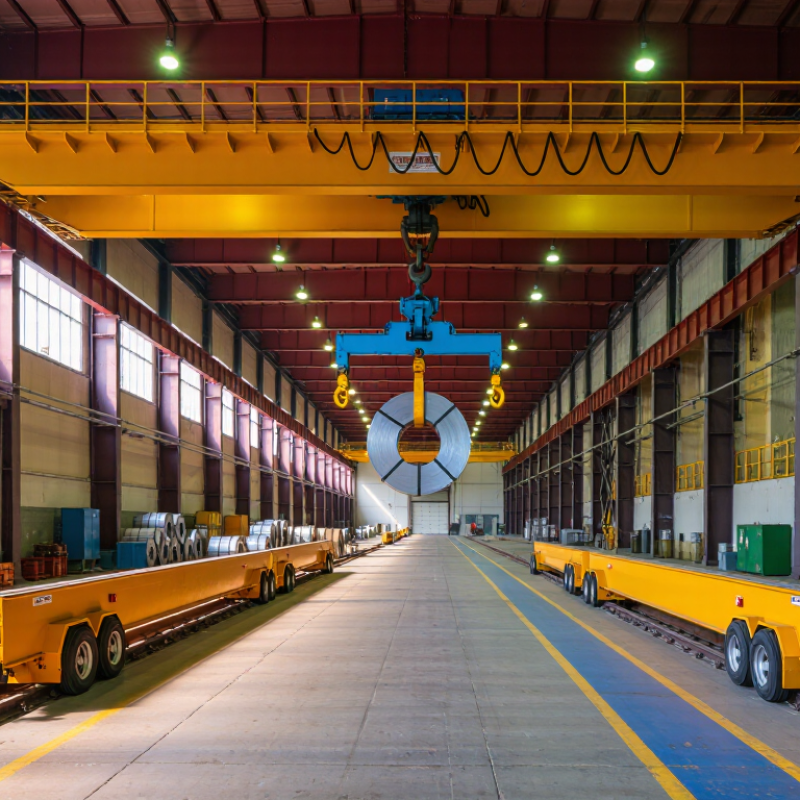
What Is a Bridge Crane and How Does It Work?

Bridge Crane Definition and Main Structural Components

What Is a Bridge Crane and How Does It Work?

Bridge Crane Definition and Main Structural Components

A bridge crane is an overhead lifting system that moves loads across a building. It usually travels along parallel runway beams fixed to the structure. The main bridge spans the working area. End trucks support the bridge and move it along the runways. This arrangement creates a clear floor space for production, storage, or maintenance work.

The bridge carries a trolley, which moves sideways across its length. A hoist mounted on the trolley raises and lowers the load. Wire rope, chain, hooks, and lifting accessories connect the hoist to the material. Electric motors drive the bridge and trolley wheels. Controls may be pendant-operated, remote-controlled, or installed in a cabin. Each method requires trained operation.

Load capacity depends on the bridge design, runway condition, hoist rating, and building support. These details must agree. A practical inspection checks wheels, brakes, ropes, hooks, limit devices, and bolts. Inspectors also look for unusual noise, uneven travel, or damaged electrical parts. Small defects can become expensive failures.

The crane does not carry weight alone. The supporting structure matters equally. Engineers review wheel loads, deflection, clearances, and local building conditions before installation. Measurements are sometimes imperfect, especially in older workshops. That uncertainty deserves a second check. Operators should avoid side pulling, sudden starts, and suspended loads over people. Regular records make maintenance decisions more reliable.

How a Bridge Crane Supports and Moves Loads

What Is a Bridge Crane and How Does It Work?

A bridge crane spans a work area with parallel runway beams. Its bridge girder travels along end trucks, while a trolley moves across the girder. The hoist raises and lowers the load with wire rope or chain. This arrangement supports heavy materials above the floor, keeping aisles clearer for workers and vehicles.

It is a simple idea. It is not effortless.

Load movement follows three controlled paths: lifting, cross travel, and long travel. The bridge transfers wheel loads into the runway structure, then into columns or the building frame. Operators must consider load weight, center of gravity, acceleration, and stopping distance.

The Occupational Safety and Health Administration requires rated-load markings and regular inspections under 29 CFR 1910.179. Grand View Research’s 2024 overhead cranes report estimates the global market could grow at about 4.8% annually from 2024 to 2030. That growth reflects wider material-handling demand, but market growth does not remove operating risks.

A calculation can still miss a damaged beam or uneven load.

Tips:

Confirm the load’s actual weight before lifting. Check hooks, ropes, brakes, controls, and runway areas. Keep people outside the suspended-load zone. Use slow movements near doorways and storage racks. Stop when visibility is poor.

In practice, floor plans are rarely perfect. Experienced operators still pause, reassess, and communicate before each critical lift.

Key Operating Steps from Lifting to Positioning

What Is a Bridge Crane and How Does It Work?

A bridge crane moves loads across a defined work area. It uses parallel runways, a traveling bridge, a trolley, and a hoist. The bridge travels along the runways, while the trolley moves across the bridge. The hoist raises or lowers the load with a wire rope or chain. This arrangement gives operators controlled movement in three directions.

Safe operation begins with a pre-use inspection. The operator checks the hook, latch, rope, brakes, pendant controls, and limit switches. The rated capacity must match the load, including lifting attachments. The load should sit beneath the hoist, not at an angle. Small details matter.

Before lifting, the operator clears the travel path and confirms signals with the designated person. A short test lift reveals swinging, uneven loading, or unusual noise. If the load tilts, lower it and correct the rigging. Do not drag it sideways. Never move a suspended load over people.

After lifting, the operator travels slowly and avoids sudden braking. The trolley moves the load toward its destination, while the bridge provides longer travel. Positioning requires small control inputs and steady observation. The load should stop directly above its landing point before lowering. Watch the corners. They catch easily.

In real workplaces, rushed movements cause preventable errors. Even experienced operators can misjudge load balance or clearance. A second check may feel unnecessary, but it often prevents damage. Procedures should be followed every time, not only after an incident.

What Is a Bridge Crane and How Does It Work? - Key Operating Steps from Lifting to Positioning

Operating Stage Main Crane Component How It Works Key Operator Action Important Control or Safety Point
1. Pre-Operation Inspection Bridge, runway, hoist, hook, ropes or chains, controls The operator verifies that the crane structure, lifting equipment, travel path, and control system are ready for use. Check for visible damage, abnormal wear, loose components, obstructed travel paths, and readable capacity markings. Do not operate the crane if a condition could affect safe operation. The rated load must not be exceeded.
2. Load Assessment Load block, hook, sling, spreader, or other below-the-hook device The load weight, center of gravity, lifting points, and attachment method are evaluated before movement. Confirm that the total lifted load, including attachments, is within the crane and accessory capacity. Use only suitable, inspected lifting accessories. Keep personnel clear of the suspended-load area.
3. Hook Positioning Hoist and trolley The trolley moves the hoist along the bridge so the hook can be placed above the load's intended lifting point. Align the hook vertically over the load to reduce side loading and unintended swinging. Side pulling is unsafe because it can impose forces for which the hook, rope, and crane are not designed.
4. Load Attachment Hook safety latch and rigging accessories The load is connected to the hook using an appropriate sling, shackle, lifting beam, or approved attachment method. Seat the attachment correctly in the hook bowl and verify that the rigging is balanced and secure. Never load the hook tip or latch, and never allow a sling to be pinched, twisted, or exposed to sharp edges without protection.
5. Initial Lift and Balance Check Hoist motor, drum, wire rope or chain, and load block The hoist raises the load vertically by winding wire rope onto a drum or moving a load chain through the hoist mechanism. Lift the load only a short distance, pause, and check balance, rigging security, brake holding, and clearance. Stop immediately if the load tilts excessively, the rigging shifts, or unusual noise or movement occurs.
6. Vertical Lifting Hoist drive, brake, limit switch, and load block The hoist raises the load to the required clearance using controlled motor movement and braking. Lift smoothly at a controlled speed and maintain enough clearance for the planned horizontal travel. Avoid shock loading, sudden acceleration, and lifting people. A limit switch is a protective device, not a routine operating stop.
7. Trolley Travel Trolley wheels, bridge girders, end trucks, and trolley drive The trolley travels along the bridge girders, moving the suspended load across the crane span. Move steadily while monitoring load swing, overhead clearance, and the path of travel. Use smooth starts and stops to limit pendulum action and avoid contact with structures or equipment.
8. Bridge Travel End trucks, wheels, runway rails, and bridge travel drive The complete bridge moves along parallel runway rails, carrying the trolley and suspended load through the work area. Travel only along the authorized runway and continuously observe the load path and surrounding personnel. Warning devices, audible signals, travel limits, and collision protection must be used as applicable to the installation.
9. Load Positioning Hoist, trolley, bridge, and pendant or radio controls The operator combines vertical, trolley, and bridge movements to place the load above its destination. Make small corrections, reduce speed near the destination, and keep the load under control. Do not guide a suspended load by placing hands or feet beneath it. Use approved tag lines when appropriate.
10. Lowering and Landing Hoist brake, load block, hook, and landing surface The hoist lowers the load onto a stable, prepared surface while the operator controls descent and alignment. Lower slowly, confirm that the load is fully supported, and release tension before removing the rigging. Keep hands and feet away from pinch points and do not remove attachments while the load is still supported by the crane.
11. Unhooking and Return Hook, rigging, trolley, and bridge travel system After the load is stable, the lifting accessories are removed and the empty hook is returned to a safe position. Move the hook and controls to the designated standby location without obstructing aisles or work areas. Avoid leaving a suspended load unattended and keep the hook high enough to prevent contact with people or equipment.
12. Shutdown and Recordkeeping Main disconnect, controls, brakes, and inspection records The crane is secured after use, and defects or unusual operating conditions are documented for follow-up. Place controls in the off position, isolate power when required by site procedures, and report problems promptly. Maintenance and inspections should be performed by qualified personnel according to applicable regulations and the crane's service instructions.

Note: A bridge crane normally combines three basic motions: hoisting and lowering, trolley travel across the bridge, and bridge travel along runway rails. Actual operating procedures, inspection intervals, rated capacities, and required safeguards depend on the crane design, load, workplace, and applicable regulations.

Common Bridge Crane Types and Their Applications

What Is a Bridge Crane and How Does It Work?

A bridge crane moves loads across a building using parallel runways, a bridge, and a powered hoist. The bridge travels along the runways, while the trolley carries the hoist sideways. Operators can lift, lower, and position materials with controlled movements. In a busy workshop, this may mean moving a steel plate from storage to a cutting station without using floor space.

Common bridge crane types suit different working conditions. A single-girder crane is lighter, economical, and practical for moderate loads in maintenance areas or small factories. A double-girder crane provides greater lifting capacity, higher hook height, and stronger support for demanding production work.

Top-running cranes travel on rails above the runway beams, while under-running cranes use flanges beneath them. Workstation bridge cranes serve smaller zones, such as assembly benches, repair cells, or packing lines.

The correct choice depends on load weight, building clearance, travel distance, duty cycle, and available support structure. It is easy to underestimate future loads.

Tips: Check the real load path, not only the rated capacity. Inspect hooks, ropes, brakes, wheels, and controls before operation. Keep people outside the suspended-load area. A qualified engineer should verify runway strength and deflection. In practice, poor layout can reduce a crane’s value, even when the equipment itself performs well. Leave enough clearance for loads, maintenance access, and safe operator visibility. Record inspections clearly, and review them when production conditions change.

Safety Systems, Maintenance, and Operating Considerations

A bridge crane carries loads across parallel runway beams, using a movable bridge, trolley, and hoist. Its safety depends on several connected controls: overload protection, upper-limit switches, brakes, emergency stops, warning alarms, and travel limiters.

The U.S. Bureau of Labor Statistics recorded 297 occupational fatalities involving cranes from 2011 to 2017, according to data summarized by OSHA.

That figure is uncomfortable, but useful. A safety device can fail, especially when operators trust it blindly.

Maintenance must follow the crane’s duty cycle, load history, and working environment. OSHA 1910.179 separates inspections into frequent and periodic categories, with intervals based on service conditions.

Inspectors should check:

  • wire ropes for broken strands;
  • hooks for deformation;
  • brakes for delayed stopping;
  • electrical cabinets for heat damage.

The ILO’s 2023 report estimated nearly three million work-related deaths worldwide each year. Crane incidents represent only a small portion, yet they often involve severe energy and limited escape time.

Operators should confirm the load weight, inspect the lifting path, and keep people outside the danger zone. Slow movement is not wasted time.

Tips:

  • Test controls before lifting.
  • Read the load chart.
  • Use clear hand signals.
  • Stop when visibility changes.
  • Never bypass an interlock.
  • Record defects immediately.

A short checklist helps, but it cannot replace judgment. Each shift has different risks.