Choosing the right plastic molding supplier is not simply a price comparison. It is a decision about process control, communication, and long-term production stability. A supplier may offer modern machines, yet still struggle with mold maintenance, material consistency, or dimensional control. Look beyond polished websites. Ask for inspection records, sample parts, process capability data, and clear quality procedures.
John Bozzelli, a respected injection molding consultant and educator, has stated, “The mold is the heart of the injection molding process.” That principle remains practical today. A supplier should explain how it designs, tests, maintains, and modifies molds. Request details about resin drying, temperature monitoring, cycle-time control, and first-article inspection. Small details matter. A poorly dried resin can create bubbles, brittleness, or visible surface defects.
Experience also deserves careful examination. Has the supplier produced parts similar to yours? Can its engineers identify warpage risks before tooling begins? Do they document corrective actions when a trial fails? These questions reveal more than a sales presentation.
Do not choose on price alone.
A low quotation may exclude mold revisions, testing, packaging, or future engineering support. I have learned that even experienced buyers can overlook communication quality. Delayed answers often become delayed production. The best partner should provide realistic timelines, measurable quality targets, and transparent escalation procedures. Still, no supplier is perfect. A thoughtful evaluation should recognize limitations and discuss them openly. The right plastic molding supplier is not merely a manufacturer. It is a technical partner that protects your product, schedule, and reputation.

Before choosing a plastic molding supplier, define what the project must achieve. A clear requirement prevents attractive but unsuitable quotations. Specify the part’s function, dimensions, resin type, color, surface finish, and expected annual volume. Include drawings with tolerances, critical areas, and assembly points. A supplier cannot price accurately from a rough sketch alone.
Consider the production environment too. Will the part face heat, moisture, impact, or repeated movement? State the required mold life and acceptable cycle time. Mention packaging needs, inspection methods, and delivery milestones. In practical project reviews, missing tolerance data often creates expensive revisions. Early volume estimates are also frequently wrong. That is not a failure, but it should be recorded as an assumption. A reliable supplier will question unclear requirements instead of accepting every figure silently.
Tips: Prepare a one-page project brief before contacting suppliers. Add a marked-up sample part or reference photo when possible. Separate must-have features from preferred features. Ask suppliers to identify risks involving wall thickness, draft angles, shrinkage, or warpage. Request sample approval criteria in writing. Keep revision numbers on every drawing and file. Small details matter. This discipline helps suppliers compare the same requirements and gives you stronger evidence when evaluating technical proposals.
Choosing a plastic molding supplier requires more than comparing hourly rates. Review its experience with materials, part sizes, surface finishes, and production volumes similar to your project. Ask for anonymized case details, process records, and examples of difficult molding problems it solved. Practical experience often appears in small details, such as proper draft angles, gate placement, and shrinkage control.
Examine the supplier’s capabilities before approving a mold design. Can its engineers conduct mold flow analysis, design cooling channels, and recommend suitable resins? Do they understand tolerances, warpage risks, and dimensional inspection? A capable team should explain these issues in clear language, not hide behind technical terms. Request a documented inspection plan. It should identify gauges, sampling frequency, and acceptance criteria.
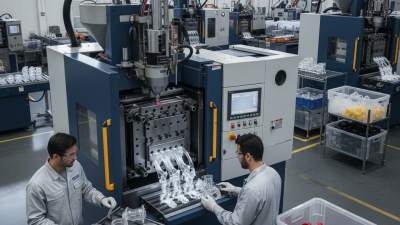
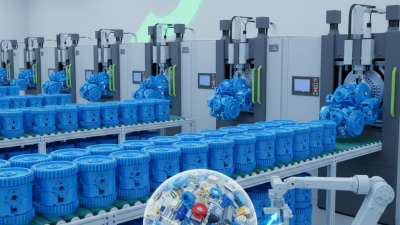
Production equipment also deserves close attention. Check the injection machine range, clamping force, shot size, automation, and auxiliary drying systems. For engineering plastics, stable resin drying can prevent brittle parts and inconsistent dimensions. Inspect maintenance records, calibration certificates, and machine utilization. A clean, organized floor is useful evidence, but it is not proof of consistent output. Ask to see recent production data, including defect rates and corrective actions. Some suppliers present impressive equipment lists yet lack trained operators. That weakness is easy to miss. A trial run can reveal more than a polished presentation. Review the first samples under real assembly conditions, because a part that looks perfect may still fail during installation. Allow room for questions and revision; even experienced teams occasionally overlook a practical constraint.
Practical supplier evaluation matrix based on measurable manufacturing, quality, engineering, and production-capacity indicators.
| Evaluation Category | Key Evaluation Dimension | Weight | Supplier Profile | Score (1–5) |
Verified Data or Required Evidence | Assessment |
|---|---|---|---|---|---|---|
| Supplier Expertise | Relevant plastic molding experience | 10% | Profile A | 5.0 | More than 15 years of injection molding experience; documented production of automotive, medical, and industrial components. | Strong fit for complex and regulated projects. |
| Supplier Expertise | Material-processing knowledge | 8% | Profile A | 4.5 | Processes ABS, PC, PA, POM, PP, TPE, glass-filled polymers, and flame-retardant grades; maintains material drying and traceability procedures. | Suitable for engineering-grade and filled materials. |
| Supplier Expertise | Design-for-manufacturing support | 8% | Profile A | 4.5 | Provides mold-flow analysis, draft-angle review, wall-thickness checks, gate-location recommendations, and tolerance feedback before tooling. | Reduces tooling changes and launch risk. |
| Production Capability | Clamping-force range | 8% | Profile A | 5.0 | Injection molding machines ranging from 80 to 1,300 metric tons, covering small precision parts through large structural housings. | Broad capacity for varied part sizes. |
| Production Capability | Part-size and shot-weight capability | 6% | Profile A | 4.5 | Supports parts from approximately 2 g to 12 kg, subject to resin density, mold design, and machine specifications. | Appropriate for both precision and large molded components. |
| Production Equipment | Machine technology and process control | 8% | Profile A | 4.5 | Uses hydraulic and all-electric machines with programmable pressure, speed, temperature, and holding profiles; process parameters are digitally recorded. | Good repeatability and process visibility. |
| Production Equipment | Automation and auxiliary equipment | 6% | Profile A | 4.0 | Robotic part removal, automatic material conveying, resin dryers, mold-temperature controllers, chillers, and vision-based inspection available. | Suitable for stable medium- to high-volume production. |
| Tooling Capability | Mold design and maintenance control | 8% | Profile A | 4.5 | Uses standardized mold-design reviews, preventive maintenance schedules, spare-part records, and documented mold-life monitoring. | Lower risk of unplanned tooling downtime. |
| Quality Management | Quality-system certification | 8% | Profile A | 5.0 | Current ISO 9001 certification; additional sector-specific certification should be verified when medical, automotive, or aerospace requirements apply. | Meets a recognized baseline for controlled production. |
| Quality Management | Inspection and measurement capability | 8% | Profile A | 4.5 | Coordinates, optical measurement, digital gauges, color measurement, dimensional reports, first-article inspection, and capability studies available. | Strong support for tight-tolerance components. |
| Quality Management | Process capability and defect control | 7% | Profile A | 4.0 | Tracks scrap rate, rework, customer complaints, and corrective actions; target process capability should be confirmed for critical dimensions. | Acceptable, subject to project-specific capability data. |
| Capacity and Delivery | Available production capacity | 6% | Profile A | 3.5 | Reported average machine utilization of approximately 72%; reserved capacity and peak-season loading require confirmation before contract award. | Adequate for planned volume if capacity is formally reserved. |
| Capacity and Delivery | Typical tooling and production lead time | 5% | Profile A | 3.5 | Typical production mold lead time: 5–8 weeks; initial production parts commonly require 1–2 additional weeks after tool approval. | Competitive for standard tooling; complex tools may require more time. |
| Commercial Reliability | Traceability and documentation | 5% | Profile A | 4.5 | Lot-level resin records, operator and machine records, inspection results, mold history, and shipment documentation are retained. | Good documentation for audits and root-cause analysis. |
| Commercial Reliability | Total-cost transparency | 4% | Profile A | 3.5 | Quotation separates tooling, piece price, secondary operations, packaging, validation, and change-order costs; annual price-review terms require clarification. | Obtain a complete cost breakdown before approval. |
| Risk Management | Business continuity and backup resources | 3% | Profile A | 3.5 | Maintains preventive maintenance, backup utilities, approved subcontractor controls, and documented recovery procedures; testing frequency should be verified. | Moderate risk with additional due diligence required. |
| Overall Result | Weighted supplier evaluation | 100% | Profile A | 4.4 / 5 | Overall result combines expertise, equipment, quality, capacity, delivery, documentation, cost transparency, and business continuity. | Recommended for technical review, sample approval, and final commercial negotiation. |
Recommended validation steps: review production samples, audit the facility, confirm machine availability, verify certifications, examine capability data, approve tooling specifications, and complete a pilot production run before full-scale release.
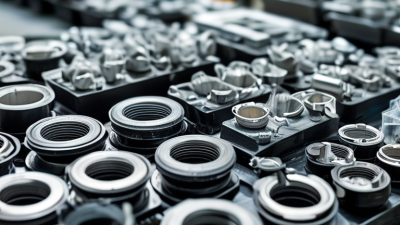
Material selection should begin with the part’s actual working environment, not a supplier’s favorite resin. Ask whether the component faces heat, chemicals, sunlight, impact, or repeated stress. A capable supplier should explain resin grades, additives, shrinkage, and molding limits in clear language. Request technical data sheets and sample parts.
Feel the difference.
Quality standards reveal how consistently a supplier controls production. Look for documented inspection plans, calibrated measuring equipment, and traceability from raw material to finished shipment. For critical dimensions, ask how the supplier manages process capability and first-article inspection. Photos of inspection reports are helpful, but a live factory review is stronger evidence.
Numbers can still hide weak sampling.
Certifications deserve careful checking. Confirm the certificate number, issuing body, validity period, and approved production scope. ISO 9001 may demonstrate a structured quality system, while sector-specific certification may be necessary for specialized applications. However, a certificate alone cannot prove good molding.
During an audit, inspect storage labels, mold maintenance records, operator training logs, and nonconformance reports.
I once assumed neat paperwork meant stable production; that assumption was too simple. Suppliers should also discuss corrective actions honestly, including recurring defects and delayed improvements. That uncomfortable detail often shows whether their quality system works beyond the sales meeting.
How to Choose the Right Plastic Molding Supplier?
Price should be judged beside lead time, tooling scope, and production risk. A low quote can hide mold maintenance, inspection fees, or expensive revisions. Ask for an itemized offer. It should show resin grade, cavity count, mold ownership, packaging, and delivery terms. Request sample parts before approving mass production. Check dimensions with calibrated tools, not visual guesses. In one project, a supplier promised a 25-day mold. The first trial arrived on day 39, delaying assembly. That mistake taught me to request a dated schedule with approval points. Allow extra time for steel changes. Real schedules move.
Communication reveals operational maturity. During quoting, ask who handles engineering questions and how quickly they respond. Good suppliers share drawings, tolerance concerns, and trial photographs without being chased. A weekly update is useful, even when nothing dramatic happens. Customer support matters after delivery, too. Ask how they manage short shipments, warped parts, color variation, and urgent replacement needs. A written corrective-action report is stronger than a vague apology. Also verify whether support remains available after the invoice is paid. I used to treat responsiveness as a soft skill. It is not. Still, fast replies cannot replace technical judgment. Compare answers from several suppliers, and record promises in the purchase agreement.
Choosing a plastic molding supplier requires evidence, not polished promises. Start with a quality audit at the production site. Review machine maintenance, mold storage, resin traceability, inspection records, and corrective-action logs. Ask operators to explain the process. Their answers often reveal more than a presentation.
Deloitte’s 2023 Global Chief Procurement Officer Survey reported that 74% of procurement leaders experienced supply-chain disruption. Reliability must therefore include backup capacity and clear escalation procedures. Request samples from normal production, not specially prepared pieces. Measure wall thickness, dimensions, surface finish, and warpage against your drawings. A first sample may pass while later batches drift. I have seen this happen. One audit is not enough.
Tips: Check at least three recent customer references. Ask about delivery consistency, defect rates, communication, and recovery after tooling problems. Confirm whether the supplier can provide capability studies, material certificates, and inspection data. ISO’s 2023 Survey recorded more than one million ISO 9001 certificates worldwide, but certification alone proves limited performance. Compare the certificate scope with the actual molding process. Visit the facility if possible. Look for labeled materials, calibrated gauges, clean work areas, and realistic production schedules. Leave room for doubt; an attractive sample can hide weak control.
Verify supplier reliability through audits, samples, and references
This evaluation model scores three practical verification areas on a 100-point scale: factory audit results, sample conformity, and customer reference quality. A supplier should demonstrate strong performance across all three areas before receiving a production order.